Internal Communication: QR Codes on Office Signage and Announcements
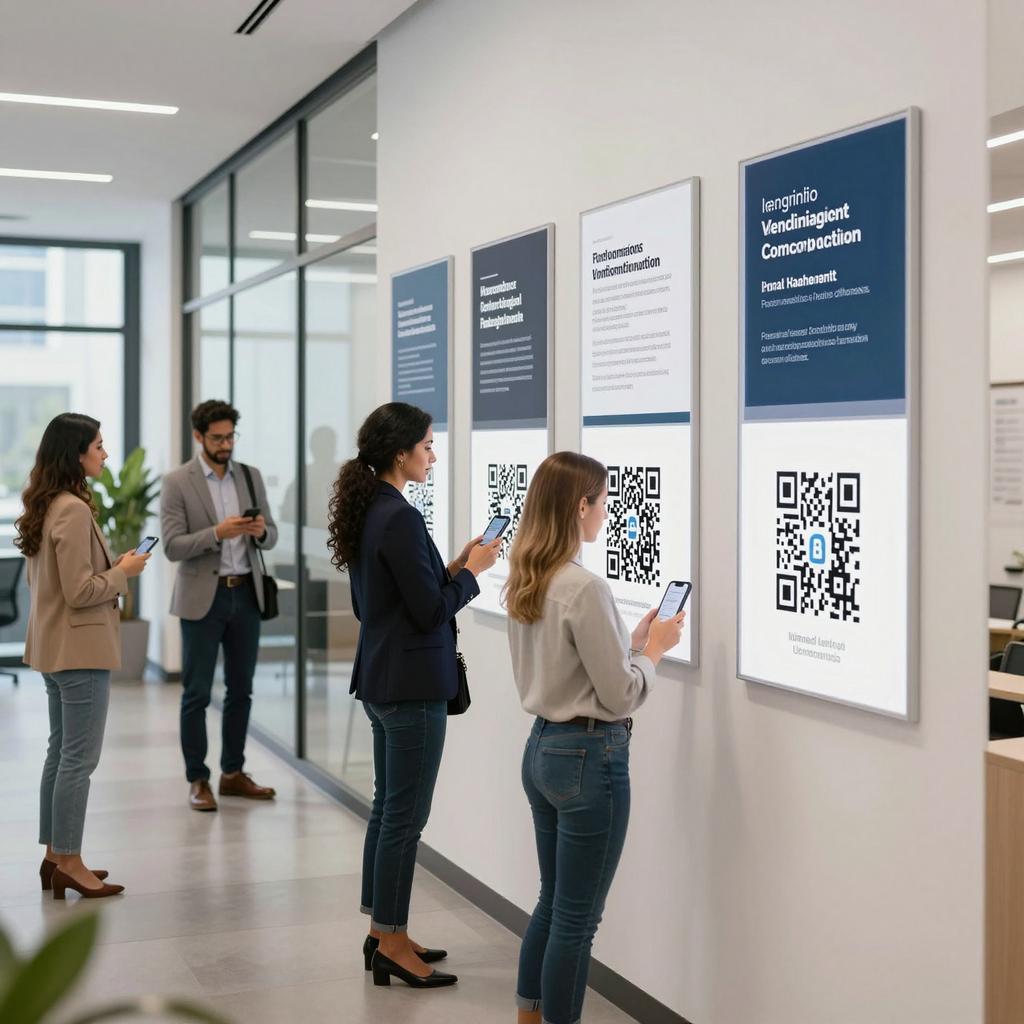
Across hybrid workplaces, QR codes in business are a deceptively simple digital transformation tool: they turn posters, door signs, table tents, and elevator notices into measurable, two-way communication channels. When paired with clear calls to action and secure redirects, QR-enabled signage can shorten the path from awareness to action—whether that action is acknowledging a new policy, booking a training seat, reporting a facilities issue, or giving fast feedback on a pilot program.
Why QR Codes on Office Signage Change the Internal-Comms Game
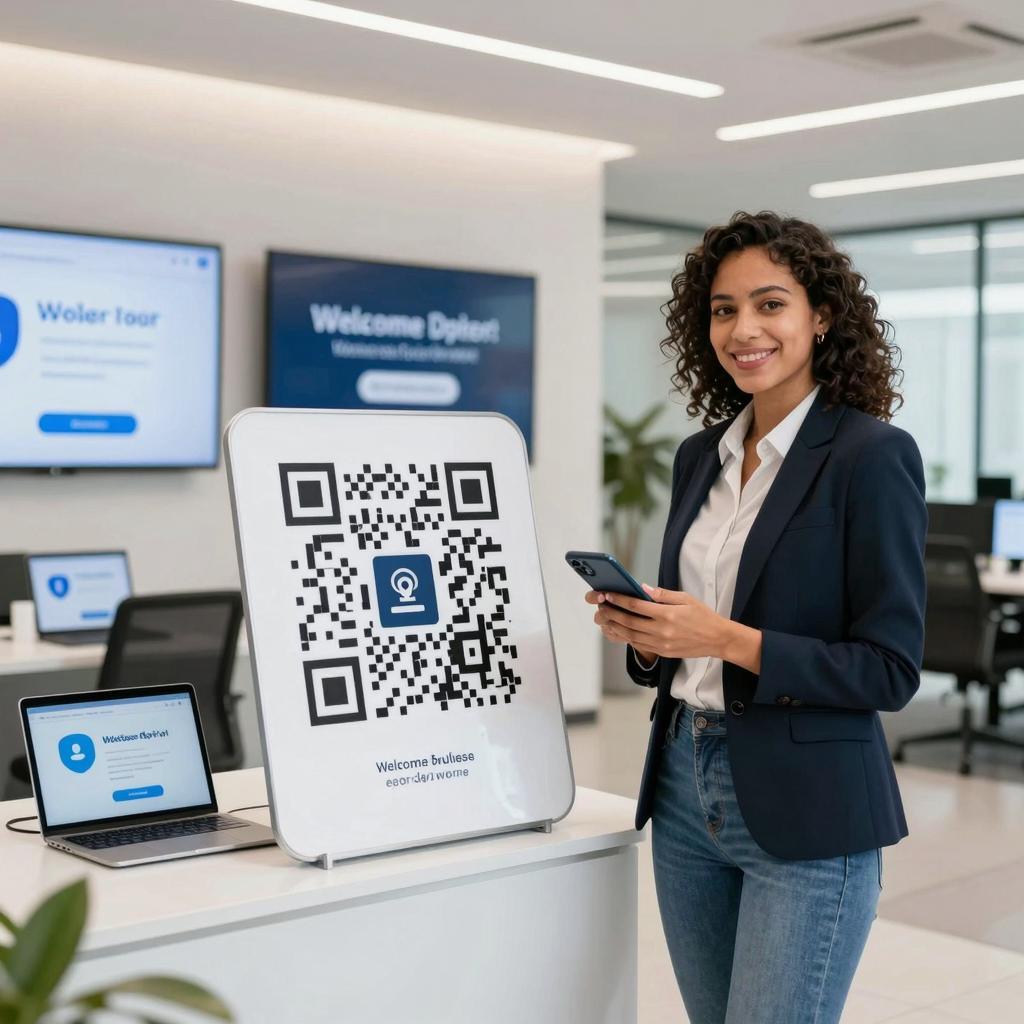
QR codes bridge offline moments with online workflows at the exact point of need. A breakroom poster can launch a wellness survey; a conference-room placard can open a room-issue form; a lobby sign can surface campus maps. This reduces friction, improves inclusivity for non-desk workers, and makes communications more dynamic than all-staff emails. It also aligns internal communication with modern marketing strategies—using context, timely nudges, and trackable journeys to drive higher engagement.
From Passive Posters to Interactive Journeys
Think beyond a single scan-and-done. One sign can route employees to role-specific content, language variants, or time-bound announcements via dynamic links. You can A/B test copy (“Scan to register in 10 seconds” vs. “Save your seat for Thursday’s workshop”) and measure lift by location. The result is a lightweight, continuous-improvement loop where signage becomes a living channel—updated centrally, reflected instantly on-site, and optimized like any other digital campaign.
The Implementation Playbook
Standards-First QR That Scale
Start with interoperable, durable codes. Follow the GS1 QR Code best practices for sizing, error-correction, and data formatting to ensure scannability and future-proofing (GS1 QR Code best practices). For technical underpinnings, the ISO/IEC 18004 QR Code specification defines how QR symbols are constructed and decoded. Combined, these standards reduce failed scans, support long-term compatibility, and make it easier to centralize dynamic redirects as your content evolves.
Design and Placement That Earn Scans
Adopt usability-first choices: adequate contrast, sufficient physical size for distance, a quiet zone around the code, and a short, human-readable fallback URL. Clear intent lines (e.g., “Scan to report a spill” or “Open the new travel policy”) outperform generic labels. Nielsen Norman Group’s guidance on QR-code usability highlights context, clarity, and perceived value as scan drivers—use it as a checklist for signage design (Nielsen Norman Group’s QR code best practices).
Systems That Turn Scans into Action
Route scans to destinations that reduce steps: prefilled forms, targeted SharePoint pages, or micro-learning in your LMS. To keep links stable as content changes, implement a resolver strategy and structured URLs. GS1 Digital Link offers a standards-based approach that maps one code to multiple, context-relevant resources across devices and audiences (GS1 Digital Link for brands). Pair this with governance—naming conventions, expiration policies, and owners—for enterprise reliability.
Measure What Matters (and Govern It)
Treat QR-enabled signage like any other channel: tag destinations, segment by location, and track conversions (completed form, booked seat, acknowledged policy). Metrics to watch include scan-through rate by placement, time-to-action, repeat scans, and variance across dayparts. Balance analytics with trust—minimize personal data collection, publish a simple privacy note, and sunset outdated codes quickly. Over time, a small library of high-performing templates (copy + design + placement) will compound ROI and reduce production cycles.
Conclusion: Make Every Wall Work Harder
QR codes on office signage and announcements are low-lift, high-leverage digital transformation tools that bring modern marketing strategies to internal communication—contextual, measurable, and continuously improvable. Start with standards, design for real-world scanning, wire scans to high-value actions, and measure relentlessly. Do this well and your everyday surfaces become a responsive network that informs faster, keeps people safer, and moves the business forward with less friction and more insight.