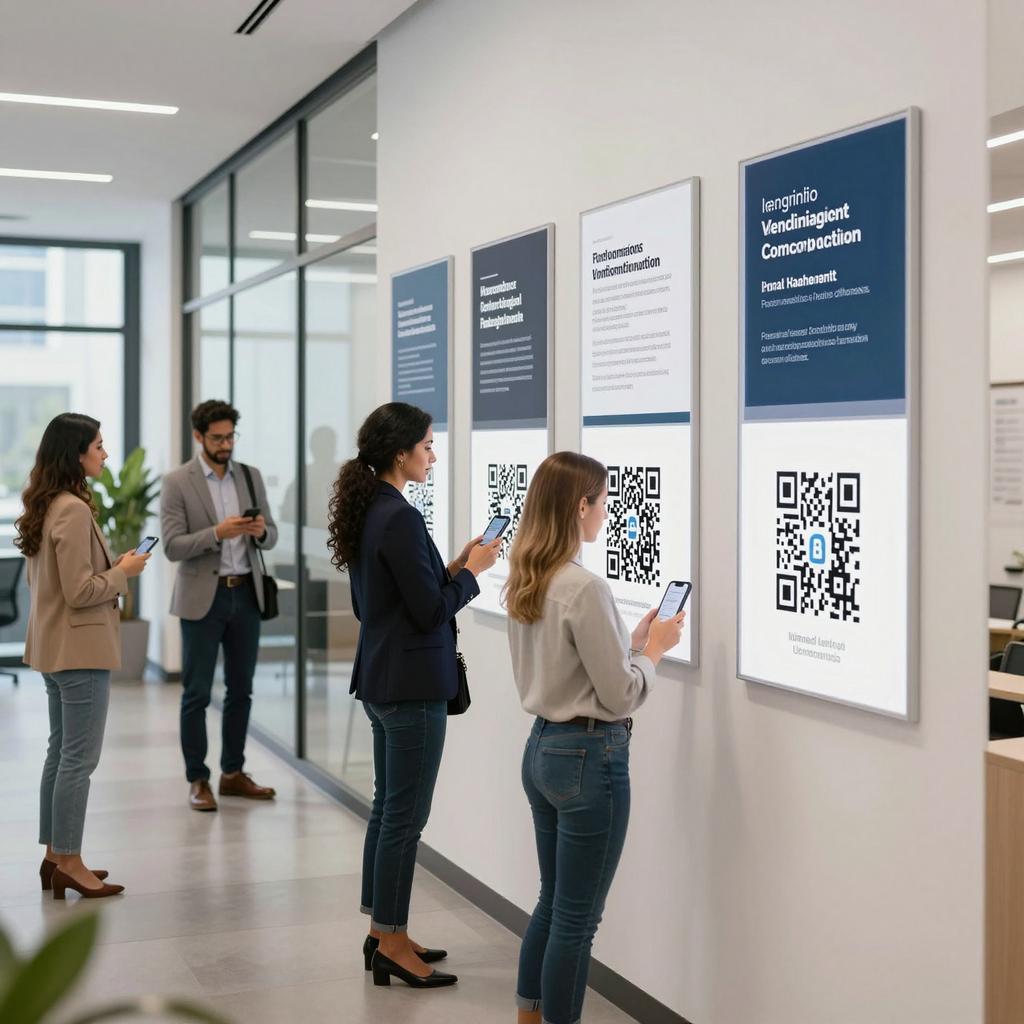
Employee Training Modules: QR Codes for Microlearning and Development
Why QR Codes Are Reshaping Employee Learning
QR codes have quietly become one of the most practical digital transformation tools for learning and development: they connect a real-world moment of need with the exact resource that solves it. In an age of hybrid work and deskless roles, scanning a code to launch a 90-second module, checklist, or how-to video turns downtime into development time. The result is microlearning that meets employees where they work—on the line, in the field, or between meetings—without the friction of logins, searching, or navigating clunky portals.
The Business Case for Just-in-Time Learning
Traditional courses excel at depth, but not at speed. QR-enabled microlearning compresses time-to-competency by delivering task-specific guidance at the point of performance. That means fewer bottlenecks, fewer errors, and faster ramp-up for new hires. For leaders framing QR codes in business terms, this approach operationalizes knowledge: quick scans translate into fewer tickets to supervisors, leaner shadowing time, and more consistent execution—hallmarks of scalable, modern marketing strategies applied inside the enterprise.
From Onboarding to Operations
QR codes shine across the employee journey. Onboarding kits can link to day-one walkthroughs and facility maps; equipment labels can launch safety checklists or maintenance snippets; sales pods can surface pitch refreshers before client calls. Microlearning also helps with compliance and SOP adherence by placing the latest, approved guidance one scan away. Borrowing from modern marketing strategies, the best experiences are mobile-first, visually scannable, and framed with a clear call to action (for example, “Learn this in 90 seconds”).
How to Design QR-Powered Microlearning
Start with performance, not content. Identify high-frequency, high-impact tasks and define the exact behavior you need to see on the job. Build bite-sized modules (60–180 seconds) around a single outcome: one decision, one procedure, one safety step. Use consistent naming, a recognizable visual pattern, and a short narrative arc: problem → action → quick check. Keep assets lightweight for fast loading, and plan a feedback loop so frontline teams can flag gaps for rapid iteration.
Content Granularity and Learning Science
Microlearning works when it aligns with how people remember and apply information. Chunking reduces cognitive load, while retrieval practice cements memory. Evidence supports this approach: see the peer-reviewed case study published on PubMed Central detailing QR code microlearning in workplace nursing education (peer-reviewed case study on QR code microlearning in nursing) and complementary findings on collaborative, QR-supported activities in formal learning contexts (Frontiers in Education research on QR code–supported cooperative learning). Translate this into practice with tightly scoped modules, quick knowledge checks, and printable job aids linked for offline reinforcement.
Governance, Security, and Analytics
Treat codes as living entry points, not static stickers. Use dynamic QR codes that redirect to the latest version of content, and apply version control so updates propagate instantly without reprinting. Protect sensitive training with SSO or role-based access, and include accessibility basics (transcripts, captions, alt text). For measurement, add UTM parameters or xAPI statements to capture scan-to-start, drop-off points, and completions. Build a simple taxonomy (team, workflow, equipment) so you can segment by location and role—critical for enterprise-scale insights.
Deployment Tactics with a Marketing Mindset
Roll out QR learning like a product launch. Map moments of need, place codes where decisions happen, and craft concise CTAs that promise value in under two minutes. Test sizing, contrast, and placement (waist-to-eye level beats floor level), and pilot with champions in operations for feedback. Real-world examples show the model in action, including an AONL case example of team member microlearning via QR codes that spotlights rapid access and frontline adoption—proof that QR codes in business settings can simplify training while reinforcing safety and quality. Pair this with your existing LMS or knowledge base to keep governance tight while adding speed through lightweight, mobile micro-sites.
Measuring Impact and ROI
Anchor your analytics to layered outcomes: adoption (scan rate, first-time users), engagement (starts, completions, time on task), application (time-to-first-apply, observed behavior change), and business results (error reduction, throughput, incident rates, customer satisfaction). A simple experiment—adding a QR-linked, 90-second refresher at a frequent failure point—can validate value quickly. When leaders view QR modules as pragmatic digital transformation tools, the payoff is clear: faster learning cycles, fewer interruptions, and a culture that treats knowledge like a product continuously optimized for performance. That is the core takeaway—small, focused interventions, delivered exactly when needed, compound into outsized gains for both people and the business.