QR Codes on Billboards: Out-of-Home Advertising That Works
Why QR Codes Belong on Billboards Today
Out-of-home remains one of the few channels that can reliably build mass reach fast, and QR codes turn that reach into measurable, real-time response. With smartphone adoption near ubiquitous and consumer comfort with scanning higher than ever, pairing bold billboard creative with a scannable path gives brands a friction-light way to move audiences from glance to action. For marketers focused on QR codes in business, the opportunity is to fuse OOH’s scale with the precision and accountability of modern marketing strategies.
The attention-to-action bridge
OOH excels at attention, but attention without an action path is wasted. A prominent QR code plus a clear, benefits-first call to action creates that bridge: see, scan, solve. The details matter—contrast, quiet zone, distance, and a short, trustworthy URL all raise scan rates. Industry guidance like OAAA’s five tips for out-of-home designers using QR codes reinforces practical design choices that reduce friction and make scanning feel obvious and safe.
From analog impressions to digital outcomes
QR codes let you attribute OOH exposure to site visits, app installs, and conversions—closing a measurement gap that once made billboards feel solely upper-funnel. Use unique destination URLs, UTM parameters, and dynamic redirects by market, board, and daypart to map scans to outcomes. Resources such as OAAA’s best practices for digital out-of-home offer standards that help teams align creative, media, and analytics so OOH results roll up cleanly into broader performance dashboards.
Design and Placement Principles That Drive Scans
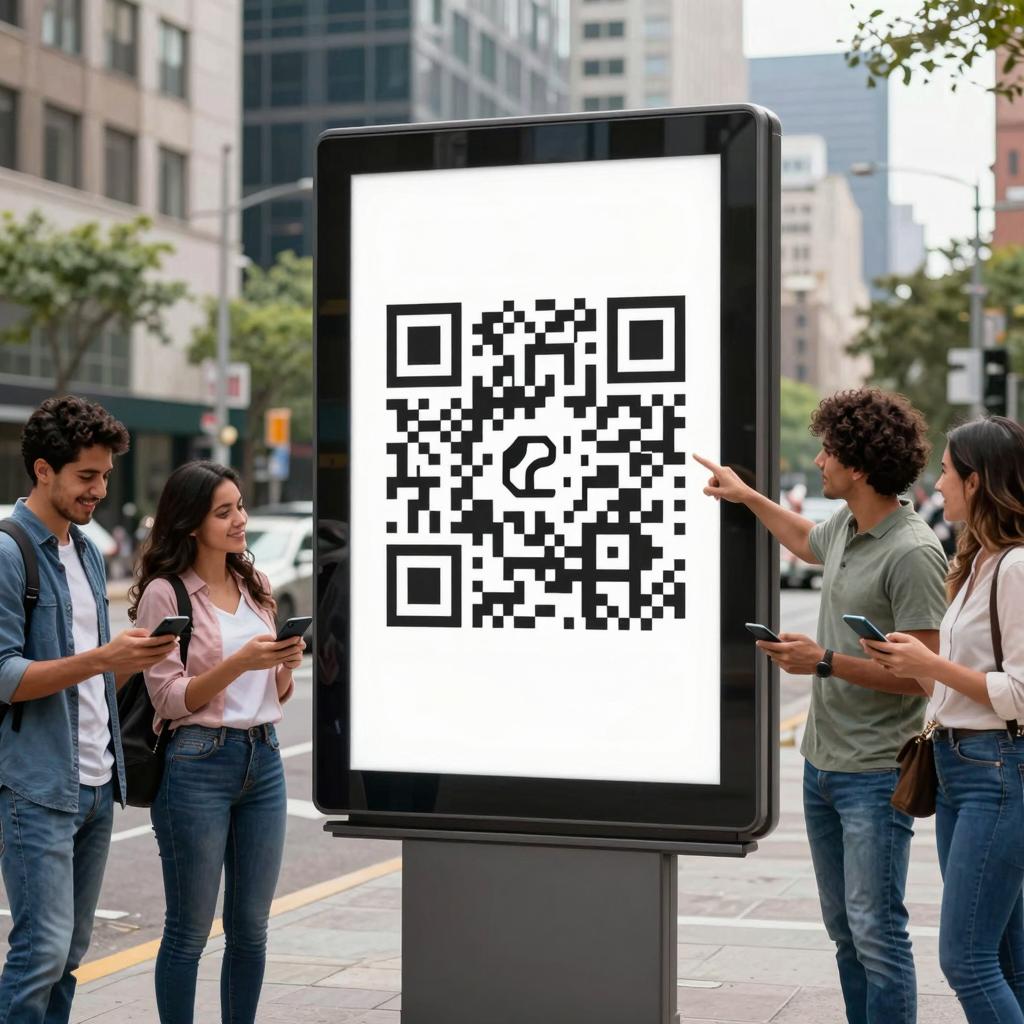
Start with use case and context. If drivers have limited dwell time, lead with branding and a simple vanity URL while placing QR codes where pedestrians pause—transit shelters, street furniture, concourses, campuses, and events. Keep codes large with strong contrast and a generous quiet zone; pair them with a concise value proposition (“Scan for 20% off today”) and a visual affordance (arrow, phone icon) to cue behavior. Treat the landing page as a digital transformation tool: ultra-fast load, mobile-first UX, minimal fields, and a single, high-intent next step.
Make safety and context non-negotiable
Scanning should never compete with safe driving. Prioritize environments with natural dwell (stations, sidewalks, stadiums, retail), and complement roadside units with QR-enabled placements nearby to capture interest when audiences can safely act. For responsible implementation and stakeholder alignment, consult OAAA’s guidance on the power and caution of QR codes in OOH to balance innovation with public safety and user experience.
Measurement, Iteration, and Real ROI
Tracking beyond the scan
A scan is a start, not success. Tie QR traffic to on-site engagement, lead quality, and revenue so you can calculate cost per acquisition by board, market, and creative. Enrich with geo and time-of-day signals, and retarget qualified visitors across paid search and social to extend the impact of each impression. To integrate mobile handoffs and identity responsibly, see OAAA’s mobile and social OOH application guidelines for data, privacy, and activation best practices.
Test like a digital marketer, build like a brand
Apply agile testing to OOH: rotate creative variations, offers, and CTA phrasing; optimize by dwell environment; and use dynamic QR destinations to localize promos without reprinting creative. Pair short-run pilots with clear success metrics, then scale winning formats. Over time, consistent QR treatment becomes a brand asset—teaching your audience where value lives—while your analytics stack evolves into a durable system of record for QR codes in business and other digital transformation tools across channels.
The Bottom Line
QR-enabled billboards transform OOH from a powerful awareness medium into a measurable growth engine. When you design for context, prioritize safety, and connect scans to seamless mobile experiences, you convert fleeting attention into outcomes that compound. Treat QR as the onramp to modern marketing strategies—prototype quickly, measure what matters, and scale the combinations of creative, placement, and offer that reliably drive your customers to action.