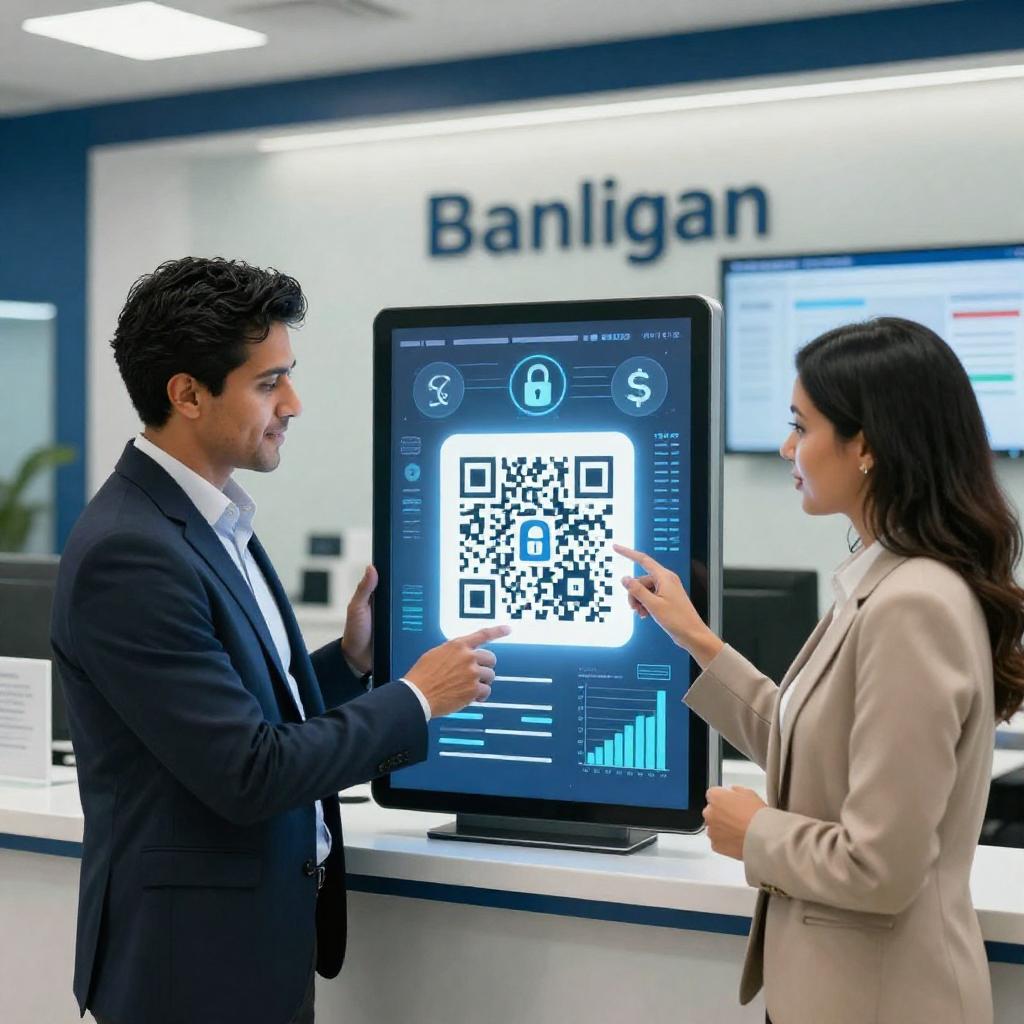
QR Codes in Banking & Financial Services: Secure Transactions
Why QR Codes Are Reshaping Secure Transactions
QR codes in business have matured from a novelty to a serious instrument for secure, interoperable payments. Banks and fintechs increasingly treat them as digital transformation tools because the format is open, camera-native, and easy to deploy across channels. Critically, security and trust rest on standards. The EMVCo QR Code specifications for payments define data structures that reduce ambiguity and enable consistent validation, while the World Bank analysis of QR codes in payments documents how standardized QR ecosystems drive inclusion, lower acceptance costs, and improve risk controls.
From Convenience to Compliance: The Security Stack
Security in QR-based transactions hinges on the payload, the app that scans it, and the rails that process it. Dynamic QR codes limit replay risk by expiring quickly and embedding transaction-specific data; cryptographic signatures protect integrity; and back-end checks enforce velocity limits and merchant validity. Tokenization further reduces exposure by replacing sensitive PANs with single-use or domain-limited tokens—see EMVCo payment tokenization for how issuers, wallets, and networks minimize account data in the clear. When combined with device binding, step-up authentication, and strong KYC, QR becomes a compliant, auditable way to move money.
Interoperability Matters
Fragmented QR formats undermine both security and user experience. Interoperable schemes align on common data elements, merchant category codes, and country identifiers, allowing acquirers and issuers to validate more signals, detect anomalies, and meet AML/CTF obligations. Europe’s instant payments community is advancing this through the European Payments Council standardization of QR codes for mobile-initiated SEPA credit transfers, while EMVCo harmonizes merchant-presented and consumer-presented modes globally. The result: fewer acceptance failures, richer risk signals, and simpler compliance across borders.
Threats and Mitigations
Like any channel, QR can be abused through tampering, phishing (quishing), or malicious redirection. Financial institutions counter these with tamper-evident displays, real-time merchant verification, app-level domain whitelisting, and out-of-band confirmations for high-risk actions. Educating customers to verify merchant names and amounts before authorizing, and to prefer first-party banking apps over generic scanners, dramatically reduces risk. On the back end, anomaly detection across QR payload fields (amount, MID, MCC), device fingerprints, and geolocation helps stop fraud before funds move.
Business Impact and Implementation Playbook
Use Cases Across Banking and Fintech
Beyond point-of-sale, QR-enabled journeys span ATM cardless cash, branchless onboarding, bill payment, P2P transfers, and remittances. For enterprises, QR codes in business unify payments with modern marketing strategies: link a receipt QR to loyalty enrollment, surface personalized offers in-app after a scan, or bind a refund flow to the original transaction. These experiences compress steps, reduce checkout friction, and make compliance events (consent, disclosures) more trackable.
Architecture and Data Governance
A resilient blueprint pairs a stateless QR generation service with an HSM-backed signing service, issuing dynamic payloads that include transaction IDs and scopes. The scanning app validates signatures locally, then authorizes server-side via mutual TLS. Tokenization and vaulting minimize sensitive data, and PII is excluded from the QR itself. Observability is non-negotiable: capture payload schema versions, validation results, and risk scores to improve models. Treat QR as one of many digital transformation tools in a composable stack, with feature flags for rapid iteration and clear data retention controls.
KPIs and ROI You Can Defend
Track time-to-pay (scan to approval), authorization success rate, fraud loss per million, false-positive rate in risk screening, and merchant onboarding time. Many banks see double-digit reductions in checkout abandonment versus manual entry, and lower acceptance costs relative to card-present infrastructure. Pair hard savings (terminal costs, chargebacks) with soft gains (customer satisfaction, app stickiness) to build a durable business case.
Action Checklist for a Secure Rollout
Start with interoperable specs aligned to EMVCo; mandate dynamic, signed payloads for merchant-presented flows; add tokenization and device binding; require real-time merchant verification; instrument your scanner for offline validation and graceful failure; and publish clear customer guidance in-app. Pilot with limited MCCs, iterate on risk thresholds, and expand once KPIs stabilize. Do this well, and QR becomes a low-friction, high-trust conduit that advances compliance, reduces fraud, and anchors modern marketing strategies—delivering secure transactions your customers will actually love.