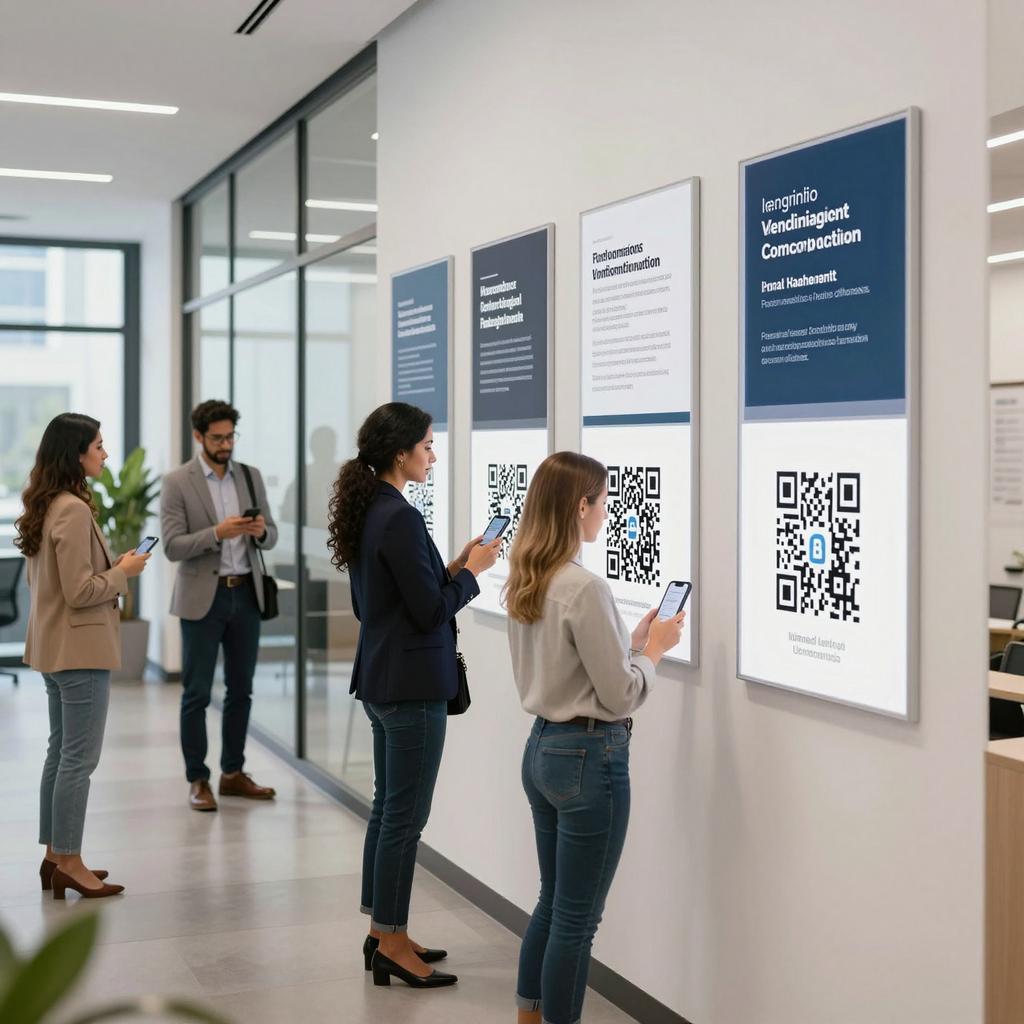
Integrating QR Codes With CRM Systems: Seamless Data Flow
The business case for connecting QR codes and CRM
Done well, integrating QR codes in business with your CRM turns any physical touchpoint into a measurable, two-way digital conversation. It is a practical, low-cost digital transformation tool: a scan can identify context, route prospects into tailored journeys, and attribute revenue to modern marketing strategies that start offline. The result is seamless data flow from print, packaging, events, and in-store experiences into a single source of truth where sales, marketing, and service teams can act in real time.
How the data flows from scan to system of record
A high-performing architecture uses dynamic QR codes that redirect through a short link carrying UTM parameters, campaign IDs, and optional context such as asset or location identifiers. The redirect lands visitors on a personalized page or form, where a hidden field persists the scan metadata. A webhook or API then posts the enriched submission to the CRM, triggering lead creation or contact updates, associating the touchpoint to the correct campaign, and notifying owners. This closed loop captures who scanned, what they scanned, and why it matters—all within seconds.
Structuring your CRM for scalable QR data
To keep the pipeline clean, plan your CRM schema up front. Create standard fields for first-touch and last-touch UTM values, a dedicated QR source field, and custom attributes like asset ID, scan timestamp, and (when permitted) coarse location. Map scans to Campaign Member records for accurate multi-touch attribution, and define automation to update lifecycle stages, open tasks for sales, and enroll contacts into nurture paths. This structure supports high-volume scan traffic without sacrificing data quality or reporting fidelity.
Measurement, standards, and governance
Offline-to-online attribution that stands up to scrutiny
QR-driven journeys should extend your attribution model, not sit beside it. Use consistent UTM taxonomies to separate channels (e.g., print, packaging, event), and reserve content parameters for asset-level granularity. Normalize values before they hit the CRM to avoid duplicates, and ensure your analytics platform aligns sessions with contact records via form capture or identity resolution. Track scan rate, unique scanners, assisted conversions, pipeline, and revenue—so you can compare QR performance head-to-head with other modern marketing strategies.
Applying GS1 Digital Link to product-pack QR experiences
For brands printing codes on products, standards matter. The GS1 Digital Link format encodes product identifiers and connects them to dynamic, user-friendly URLs that can change experiences by context (e.g., language, location, device). Using the GS1 Digital Link for Brands guidance alongside best practices for creating QR Codes powered by GS1 ensures scannability, durability, and resolvability at scale. Crucially, the standardized structure simplifies downstream CRM integration and segmentation by GTIN, lot, or market while maintaining a single, canonical product link.
Security, consent, and data hygiene by design
Trust is non-negotiable. Offer a clear value exchange (content, warranty, loyalty), present consent choices, and use double opt-in for messaging. Filter bot traffic, rate-limit endpoints, and deduplicate by email plus device or fingerprint signals to prevent inflated metrics. Encrypt PII in transit and at rest, restrict write access via scoped API keys, and enforce retention rules. Good governance protects customers, preserves brand equity, and keeps your CRM an asset—not a liability.
Use cases and rollout roadmap
High-ROI scenarios you can ship now
Start where intent is highest. At events, badge or booth QR codes can prefill form fields and route hot leads directly to owners with auto-created tasks. On packaging, codes can deliver onboarding guides, unlock registrations, and attribute cross-sell to the original product. In B2B, account-specific print pieces drive executives to tailored demos while preserving account and opportunity context. Many CRMs now include native features to accelerate this work—for example, the Vtiger CRM QR code capability—so teams can pilot quickly without heavy custom development.
Conclusion
Integrating QR codes and CRM is more than a tech tweak; it is a strategic unlock for digital transformation tools that tie physical moments to measurable growth. By standardizing data capture, aligning attribution, embracing GS1 where appropriate, and building privacy-first automation, you create a seamless data flow that empowers sales, delights customers, and proves ROI. Pick one high-intent use case, launch a tightly scoped pilot, and iterate—because the brands that bridge offline and online fastest will set the pace for modern marketing strategies.