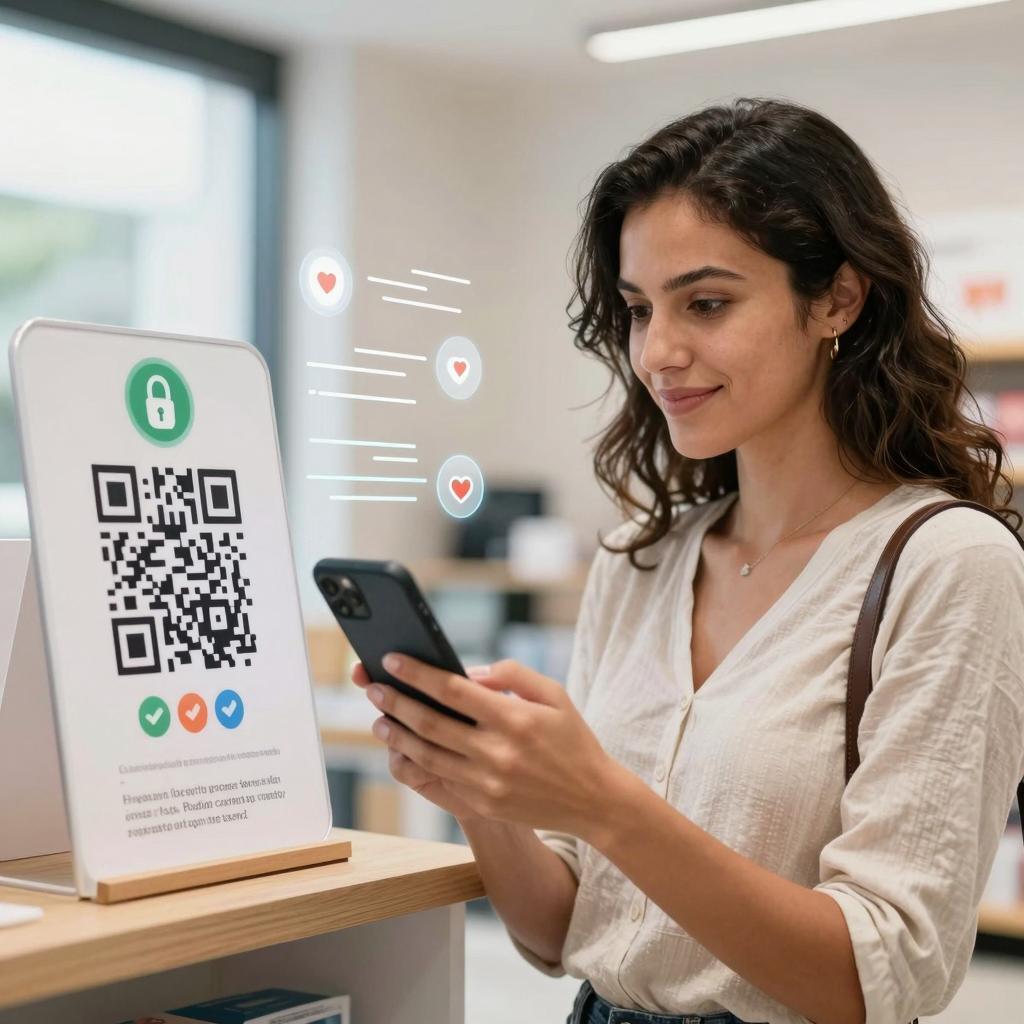
Trust Signals in QR Code Scanning: Building Consumer Confidence
Why Trust Signals Matter in QR Journeys
QR codes in business have moved from novelty to necessity, driving everything from payments to product education. Yet scams and confusing experiences still erode confidence. The difference between a quick scan and a bounce is trust: visible, consistent signals that assure people the code is safe, the value is clear, and their next tap is worth it. For brands pursuing modern marketing strategies, treating QR as a trust-first micro-journey is now table stakes.
Context and clarity build confidence
People trust what they understand. Place the QR where the promise is obvious—right next to the offer, return policy, or product benefit—and add one line of plain-language microcopy that says what happens next (e.g., “Scan to see ingredient sourcing—opens our secure site”). Use recognizable brand cues: a branded short domain, your logo in the code’s center, and a scannable size with strong contrast. Research-backed tips from the Nielsen Norman Group’s QR code usability guidelines reinforce the value of clear context, destination transparency, and safe-scanning advice for users: Nielsen Norman Group’s QR code usability guidelines.
Independent assurances shape behavior
When the stakes are higher—payments, personal data, warranty activation—people look for signals beyond brand claims. Trustmarks, labels, or “About this QR” pages that explain data use and security controls can reduce hesitation. Peer-reviewed research on QR-linked security and privacy labels shows that education plus recognizable assurances increases informed engagement: peer‑reviewed research on QR‑linked security and privacy labels. In practice, that means pairing any QR that requests sensitive actions with concise disclosures and a recognizable badge users can learn to trust.
Practical Trust Signals You Can Deploy Today
Design that reduces friction
Design is the first trust filter. Place codes at the point of decision (shelf tags, receipts, packaging panels) with a benefit-forward headline. Ensure adequate size and quiet zone, test scan paths under glare, and use high error correction for damaged packaging. Provide inclusive access: readable alts on digital placements and a short URL or NFC fallback for people who can’t or won’t scan. These small choices lower cognitive load and strengthen confidence in your digital transformation tools.
Security hygiene consumers can feel
Security is invisible—until it isn’t. Use HTTPS everywhere with HSTS, a branded domain (e.g., scan.brand.com), and human-readable slugs. Prefer dynamic QR management so you can rotate destinations if a page changes or is compromised. Display the final domain near the code in print and show a preview screen in-app before opening links. For campaigns at scale, add rate limiting, bot checks, and per-campaign tokens. These moves don’t just harden systems; they create reassuring signals users can see and feel.
Verification for higher-stakes scans
For payments, authentication, and product provenance, layer verification. Consider digitally signing QR payloads, aligning product links to established standards (e.g., GS1 Digital Link where applicable), and using one-time or user-bound tokens in loyalty apps. On mobile, request explicit consent before deep-linking to sensitive app areas and provide a visible “verify source” step. Communicate these protections in plain language so the added rigor reads as a benefit, not a barrier.
Measuring and Communicating Trust
Trust is measurable. Track scan-to-load rate, load-to-consent rate, abandonment on domain preview, repeat-scan rate, and support tickets mentioning QR. A/B test microcopy (“Scan to pay securely” vs. “Scan to pay”), branded vs. generic short domains, and the presence of trustmarks or “How this QR protects your data” links. Then publish a brief, evergreen “How we keep QR scans safe” page and reference it in packaging, receipts, and help centers to reinforce your commitment across channels.
Bottom line: Trust signals turn QR codes from risky shortcuts into reliable gateways. By combining clear context, visible security hygiene, and verifiable assurances, brands can convert curiosity into action—again and again. When QR experiences are designed for confidence, they become powerful digital transformation tools that elevate modern marketing strategies and deepen customer relationships long after the first scan.