Legal & Notarization: QR Codes for Document Verification and Signing
From Marketing to Legal-Grade Trust
Why QR Codes Belong in Serious Workflows
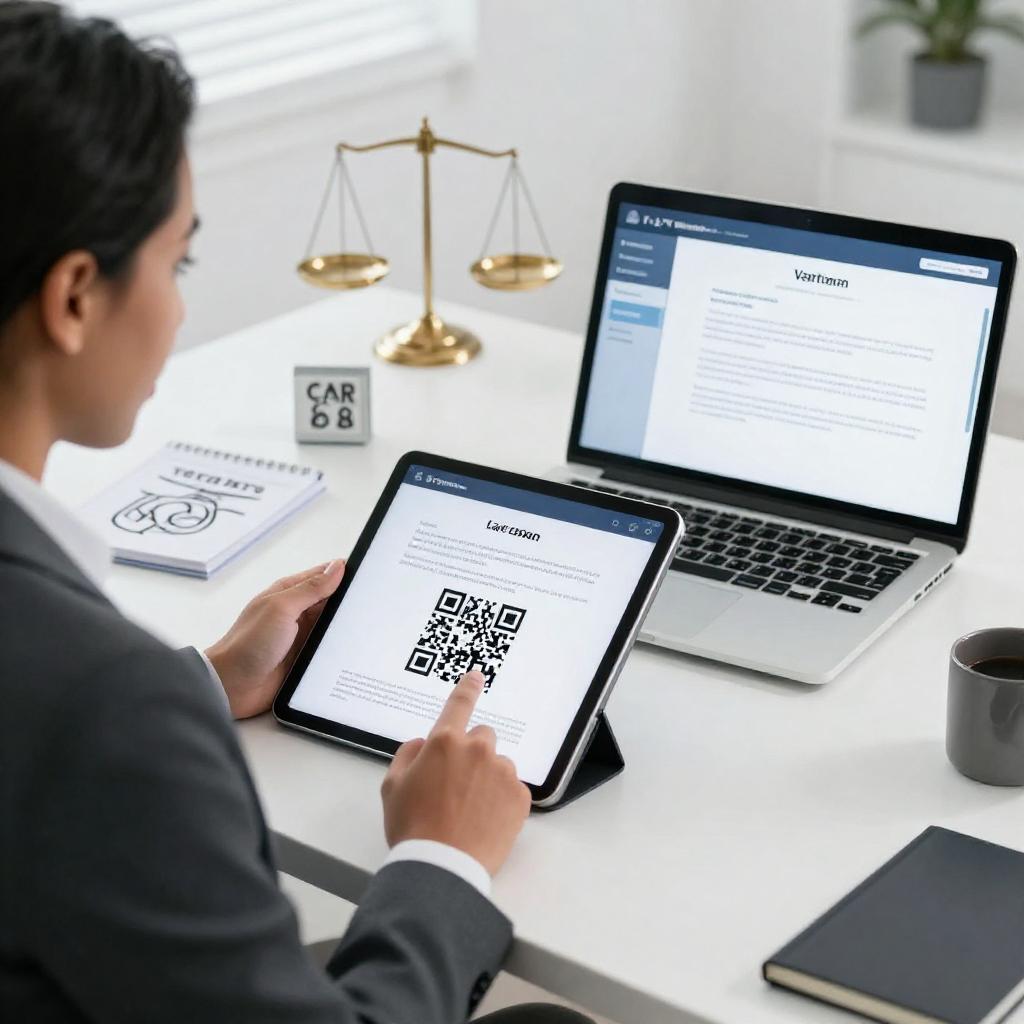
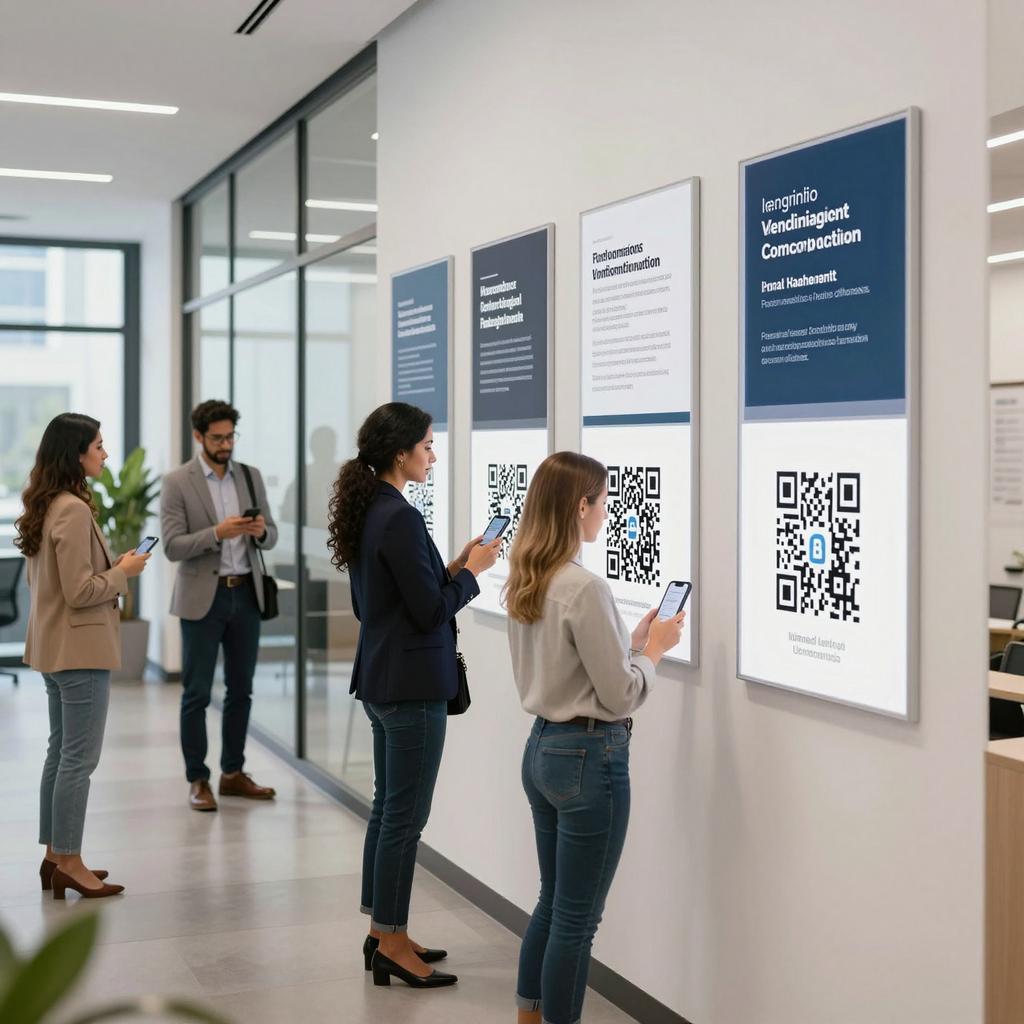
QR codes in business have outgrown their reputation as modern marketing strategies and matured into dependable digital transformation tools for document verification and signing. In legal and notarization contexts, a QR code acts as a fast, user-friendly doorway to authenticity checks, signer identity evidence, and audit trails. The code itself is not the legal proof; rather, it connects a paper or PDF to authoritative records and cryptographic assurances. When designed against recognized standards and aligned with notarial procedures, QR-enabled verification reduces friction for clients, shortens turnaround times, and makes cross-jurisdiction collaboration more reliable and defensible.
The Standards Backbone That Makes QR Verifiable
QR Symbology and Data Integrity
Trustworthy verification starts with consistent, scannable symbols. The ISO/IEC 18004:2024 QR Code standard defines the symbology, encoding, error correction, and quality rules that make codes resilient across printers, screens, and devices. Referencing the official specification ensures your generators and scanners interpret data the same way and avoid costly misreads in legal settings. See the ISO listing for the ISO/IEC 18004:2024 QR Code standard at https://www.iso.org/standard/83389.html for scope and conformance details that underpin reliable verification at scale.
Verifiable Credentials in a QR Form Factor
Beyond raw data in a matrix, QR can carry or reference cryptographically signed claims. The W3C Verifiable Credentials data model at https://www.w3.org/TR/vc-overview/ provides a framework to express who issued which claims about whom, along with proofs you can validate. In practice, a QR on a certificate or affidavit may embed a compact credential or a link to fetch it securely, enabling privacy-preserving, selective disclosure (e.g., proving attributes without overexposing PII). This design turns quick scans into rigorous authenticity checks—essential in legal workflows that demand both speed and evidentiary integrity.
Notarization and Identity: Where QR Fits
Remote Online Notarization and Mobile IDs
QR codes complement, but do not replace, the notarial ceremony. In identity proofing, many jurisdictions and platforms now accept electronic IDs and mobile driver’s licenses, which frequently present a scannable QR or barcode to confirm status with the issuer. For practical context, the National Notary Association guidance on mobile IDs for notarization at https://www.nationalnotary.org/notary-bulletin/blog/2021/11/mobile-id-future-identification-notaries explains how scans can validate active credentials and support recordkeeping. During Remote Online Notarization (RON), the QR-assisted ID check can feed into the broader compliance stack (audio-video presence, tamper-evident e-signatures, and detailed journals) without substituting for required procedures.
Designing a Defensible QR Verification Flow
On-Code vs. Linked Verification
Two robust patterns dominate. On-code verification embeds a document hash and digital signature directly into the QR for offline validation—ideal for low-connectivity environments. Linked verification encodes a short URL or resolvable identifier that retrieves the authoritative record and revocation status in real time. In both patterns, use FIPS-approved algorithms and key practices so your signatures hold up under scrutiny; see NIST FIPS 186-5 Digital Signature Standard at https://csrc.nist.gov/pubs/fips/186-5/final for current guidance on RSA, ECDSA, and EdDSA. Tie signatures to clear policies (key custody, rotation, timestamping) and maintain a tamper-evident audit trail.
Operational Risks and Controls
Governance Beyond the Code
QRs can be swapped, reprinted, or redirected if governance is weak. Mitigate risk by binding the QR to visible document identifiers (title, version, serial), using short-lived tokens for sensitive verifications, and enforcing allow-listed domains. Add revocation checks, occlusion-resistant placement, and human-readable fallbacks for accessibility. For paper, pair the code with tamper-evident seals or watermarks; for PDFs, lock content and preserve a verifiable hash. Log every scan event to establish chain-of-custody, and document how your verification service preserves evidence to satisfy discovery or courtroom challenges.
ROI Beyond Compliance
Cross-Functional Value for Business Growth
Well-implemented QR verification pays off beyond risk reduction. Clients self-verify signed documents 24/7, lowering support volume and accelerating deal cycles. Sales and service teams can incorporate the same QR mechanisms into modern marketing strategies—think onboarding kits, knowledge bases, and renewal reminders—while legal teams rely on the shared, authoritative source of truth. In short, QR codes in business become practical digital transformation tools: they streamline verification, strengthen customer trust, and generate analytics that inform continuous improvement across legal, operations, and go-to-market functions.
Conclusion
Make the QR the Doorway, Not the Proof
QR codes make verification fast and intuitive, but the legal weight comes from standards-based signatures, authoritative registries, and compliant notarial practices. Anchor your approach in ISO symbology, W3C credential models, and NIST-approved cryptography; align with RON and eNotary rules; and operate with disciplined governance. Start with a narrow use case, measure cycle time and dispute reduction, and expand iteratively. When the QR is the doorway—and the proof is cryptographic and policy-backed—you deliver a frictionless experience that stands up to legal scrutiny and scales with your business.