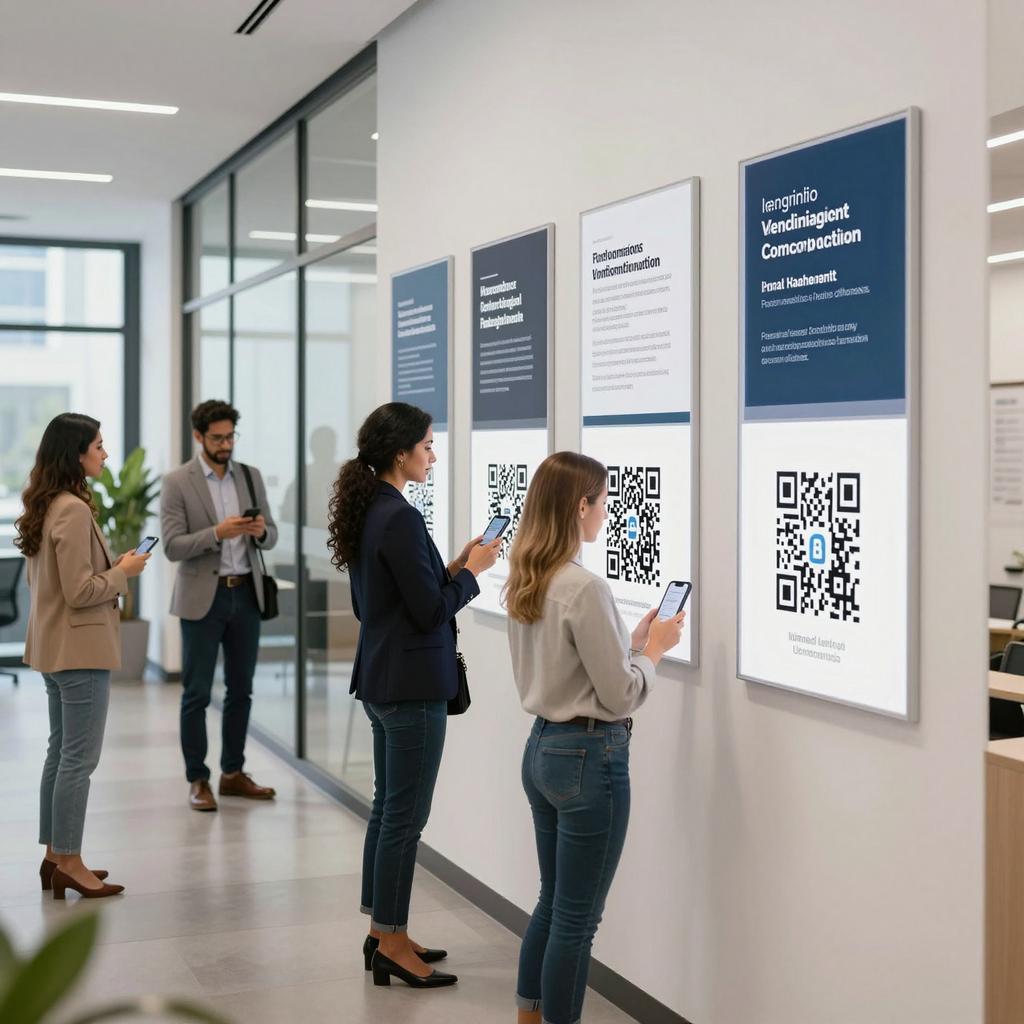
Smart QR Codes That Adapt to Environmental Changes
What Are Environment-Adaptive QR Codes?
Environment-adaptive QR codes are scannable labels whose appearance or encoded response changes with factors like temperature, humidity, light exposure, or pressure. Unlike static barcodes, these smart markers can reveal different information depending on their surroundings, turning everyday packaging, inventory tags, and retail displays into dynamic interfaces. For leaders exploring digital transformation tools, this approach elevates QR codes in business from simple redirects to context-aware sensors that unlock richer data and safer, more personalized customer experiences.
How Dynamic QR Behavior Works
Adaptive codes typically combine a machine-readable pattern with materials that shift optically or structurally when the environment changes. Those shifts can be designed to be reversible (e.g., thermochromic inks that toggle at set temperatures) or permanent (e.g., an irreversible color change when a threshold is crossed). On scan, the code can direct users to different destinations, reveal warnings, or change state to prevent reuse—useful for modern marketing strategies that rely on timely offers, authenticity checks, and automated quality assurance.
Materials Powering Adaptive Codes
Thermochromic dyes, photoluminescent phosphors, humidity-reactive polymers, and conductive inks make it possible to encode condition-dependent responses without batteries. For example, researchers have demonstrated luminescent multiplexed QR codes for temperature tracking, where emission intensity and patterning enable both machine readability and state verification. These material systems can be tuned to specific thresholds (e.g., 2–8°C for cold chains) and paired with software rules that govern redirects, validation workflows, and analytics capture.
Business Value and Use Cases
For operations, adaptive QR codes deliver verifiable, on-label signals that reduce spoilage, streamline claims, and document compliance. For marketing teams, they anchor modern marketing strategies that bridge the physical and digital: dynamic offers when a package is fresh, educational content when a product has warmed, or loyalty flows that adjust to context. In short, they act as high-ROI digital transformation tools—low-cost to deploy at scale, easy to scan with any smartphone, and powerful for capturing zero-party data while improving customer trust.
Cold Chain Visibility and Quality Assurance
In pharma, food, and specialty chemicals, small temperature excursions matter. Environment-adaptive QR codes can surface clear, scan-verified state changes, escalating from green to actionable warnings that route users to appropriate steps. Academic work on mobile IoT-ready luminescence thermometry using smart QR codes shows how optical readouts can quantify temperature shifts and interface cleanly with smartphones, supporting audit trails and automated exception handling without adding bulky electronics.
Brand Protection and Smart Packaging
Counterfeiting thrives when labels are static; adaptive codes can embed signals that only appear under certain conditions, adding a check that’s both human-visible and machine-verifiable. Research on thermoresponsive QR codes embedded in materials (QRUco) highlights interactive, tamper-evident experiences that elevate unboxing and in-store engagement. For QR codes in business, this dual utility—authentication plus contextual storytelling—creates a measurable lift in conversion while deterring bad actors.
Implementation Playbook for Organizations
Start with a sharp use case—cold chain exception reduction, warranty validation, or sustainability storytelling. Select a material system that aligns with your thresholds and regulatory context, then prototype for print method, scan reliability, and lifecycle durability. Map the logic layer (what changes when and why), integrate with CDP/CRM for attribution, and set guardrails for privacy. Establish KPIs—spoilage reduction, verified scans, assisted sales, repeat purchase—and track total cost of ownership across ink, substrate, QC, and analytics. This disciplined approach turns adaptive codes into a reliable pillar of your digital transformation tools.
Conclusion: A Smarter Code for Modern Marketing
Environment-adaptive QR codes move beyond static links to become responsive touchpoints—sensors that signal quality, guardians that deter fraud, and storytellers that tailor content to context. For leaders pursuing modern marketing strategies and scalable QR codes in business, they offer a pragmatic path to safer supply chains, richer customer journeys, and better data fidelity—proof that the most powerful digital experiences can start with a simple square on a label.