Using QR Codes in Influencer and UGC Campaigns
Why QR codes belong in creator-led funnels
QR codes in business have moved from novelty to necessity, becoming practical digital transformation tools that connect real-world moments to mobile experiences. In influencer and UGC campaigns, they compress the path from inspiration to action: one scan can subscribe, unlock an AR filter, join a challenge, or purchase with attribution intact. For brands adopting modern marketing strategies, QR flows turn creator reach into measurable outcomes without adding friction for audiences or creators.
From passive followers to active participants
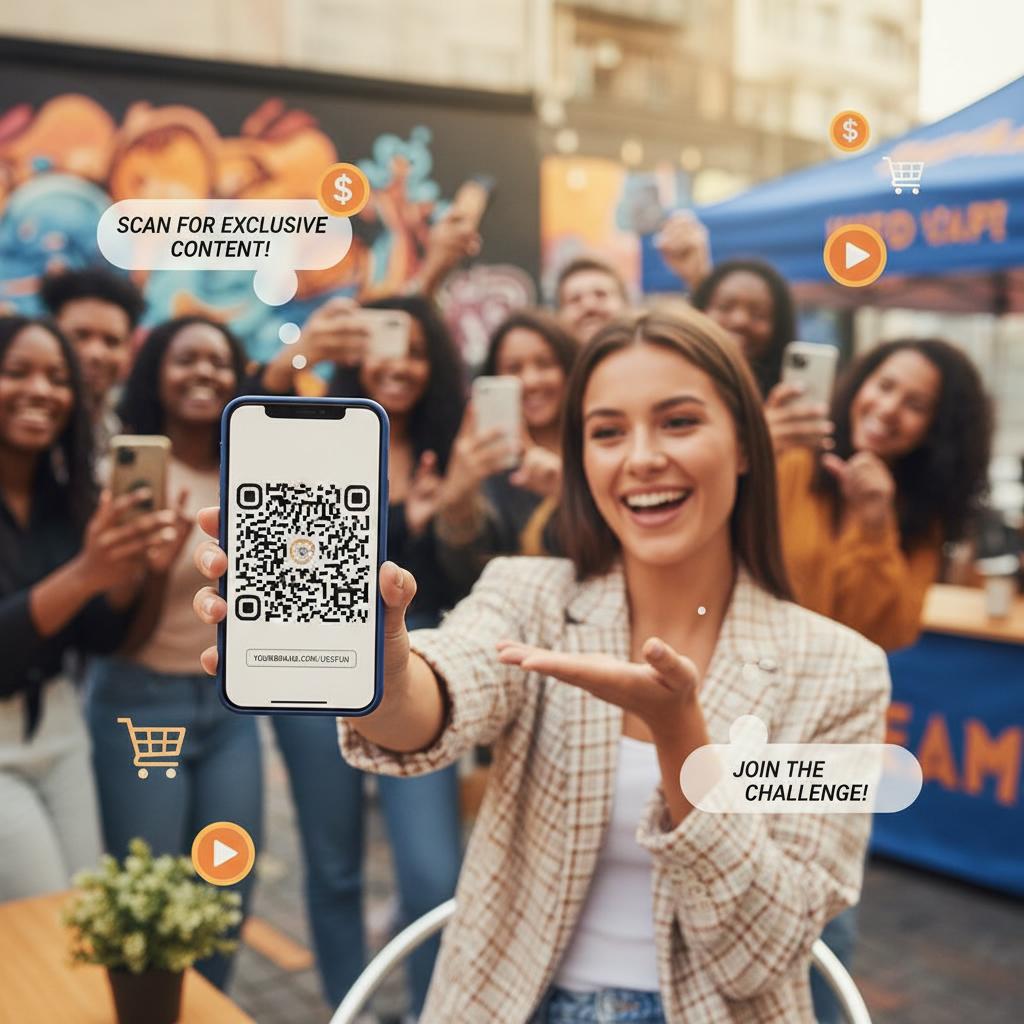
Influencer content excels at sparking intent, but QR codes capture it in the moment. Creators can place on-screen codes in Reels, add stickers in Stories, or include printable codes for meetups and packaging. Clear prompts—“Scan to try the filter,” “Scan to vote,” “Scan to enter”—convert views into contributions and UGC loops. For social growth, see Hootsuite guidance on Instagram QR codes for follower growth, which illustrates how easy scanning helps audiences follow and engage instantly.
Creator-to-commerce bridge
QR-powered journeys shine when they connect content to conversion with transparent attribution. Pair unique codes per influencer with UTM parameters so scans land on tailored pages while preserving source and campaign data. This lets you compare creators on scan-through rate, session quality, and revenue, and it works as well on event signage as it does in videos. If you need a refresher on tagging, try Hootsuite’s primer on UTM parameters and QR-enabled tracking to standardize your measurement framework.
Designing QR-powered influencer journeys
Effective QR design starts with clarity: a scannable size, strong contrast, safe placement away from edges, and a simple CTA that sets expectations. Dynamic codes future-proof campaigns by letting you update destinations without reprinting. Map the journey end-to-end—scan, land, act, share—so the destination loads fast, recognizes the creator, and rewards participation. For more tactical pointers, explore QR Code Kit’s guide to QR codes in influencer marketing covering engagement, tracking, and conversion tactics.
Smarter tracking and optimization
Modern marketing strategies demand proof. Use deep links to open apps (e.g., a specific product page in your mobile store), and reserve web landings for audiences without the app. Assign per-creator and per-placement codes to isolate performance by format and channel. Beyond native analytics, evaluate platforms that consolidate creator performance and redemption data—see Influencer Marketing Hub’s overview of influencer tracking platforms—then layer QR scan metrics onto conversion cohorts to close the loop from content to commerce.
UGC mechanics that actually work
UGC thrives on a clear prompt and a quick win. Popular mechanics include scanning to unlock branded AR effects, instant discounts for posting with a campaign hashtag, or voting to influence a limited drop. Reward the first action (scan) and the social action (share) separately to increase completion rates. Keep the creative toolkit lightweight—templates, captions, and music cues—so fans can publish in minutes. Always route scanners to a mobile-first page that previews what their post could look like to reduce hesitation.
Compliance, accessibility, and trust
As QR codes become core to QR codes in business, build trust into the experience. Use short, branded domains so destinations look credible. Add on-screen or near-code disclosures for prizes, affiliate commissions, or data capture; make creators’ FTC disclosures unmissable. Improve accessibility with high-contrast codes, adequate whitespace, and descriptive nearby text for screen readers. Host gated experiences on secure, fast pages, and publish a clear data policy when collecting UGC or emails.
Measuring ROI across channels
Treat QR as a connective tissue across digital transformation tools: creators, OOH, packaging, events, and retail. Compare scan rates, dwell time, UGC entries, assisted conversions, and repeat purchases by creator and placement. When a code outperforms, replicate its CTA and visual style across the network; when it lags, test destination speed, incentive clarity, and creative framing. The takeaway: embed QR into your influencer playbook as the simplest path from content to contribution—then iterate quickly to turn momentary attention into compounding UGC, revenue, and brand equity.