QR Codes in Healthcare: Simplifying Patient Access and Info
Why QR codes are gaining traction in healthcare
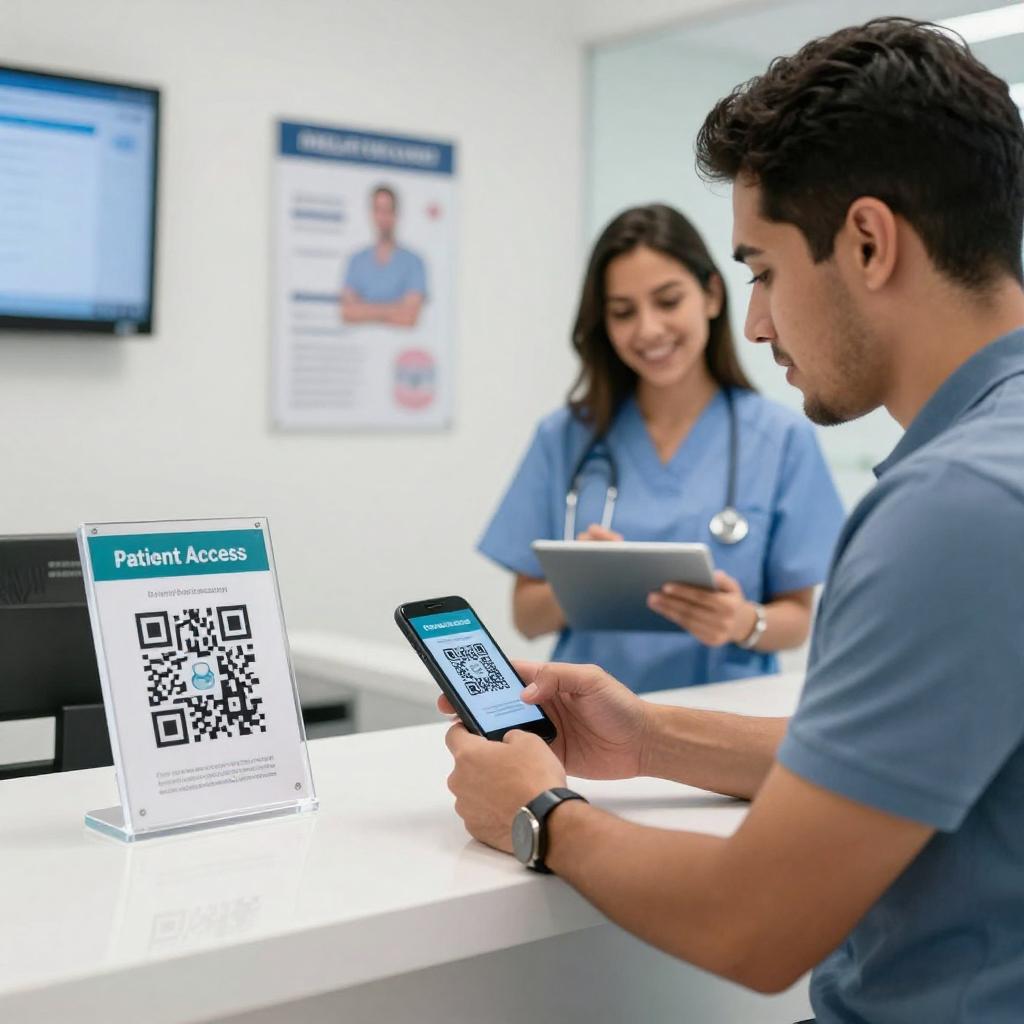
QR codes have moved from novelty to necessity in healthcare, acting as lightweight digital transformation tools that streamline access to information and services. For business-minded health leaders, they offer a fast, low-cost way to build a reliable digital front door—connecting patients to intake forms, wayfinding, after-visit instructions, and billing in a single scan. As with QR codes in business, the value comes from reducing friction, instrumenting data, and meeting consumers where they already are: on their phones.
From appointment access to after-visit summaries
High-impact use cases include contactless check-in, parking and campus maps, telehealth onboarding, and dynamic after-visit summaries that update when plans change. A peer-reviewed case report on connecting patients to verified health information with QR codes shows how a simple scan can route people to authoritative resources, improving comprehension and engagement without adding staff burden.
Reducing friction while protecting privacy
Security and privacy must be designed in from day one. Best practices include never encoding PHI directly; instead, route to short-lived URLs with role-based access, session tokens, and device checks. Use dynamic codes so destinations can be updated without reprinting. Place codes where scanning is natural (kiosks, lab doors, discharge packets), and provide a text link fallback for accessibility. These choices keep workflows fast while aligning with HIPAA and hospital cybersecurity standards.
Real-world impact and lessons learned
Organizations report higher form completion rates, fewer lobby bottlenecks, and lower print costs when QR experiences are simple and purposeful. A recent scoping review of QR code use across healthcare synthesizes evidence on patient education, medication safety, and operational efficiency—underscoring that success hinges on clarity, context, and measurement. In short, QR codes deliver business value when they are treated as part of a service design, not just a sticker on a wall.
Patient education that meets people where they are
QR-driven education replaces static leaflets with living content: videos, multilingual guidance, and accessible formats that patients can revisit at home. An ophthalmology study showing QR-enabled patient leaflets cut print costs and improved access illustrates the dual win: better patient comprehension and measurable savings. This aligns with modern marketing strategies—segment content to the journey stage, test readability, and iterate based on engagement data.
Staff workflows and clinical education
QR codes also accelerate internal workflows: quick links to policy updates, bedside checklists, device manuals, or microlearning modules delivered in the moment of need. A peer-reviewed overview of QR codes in healthcare education highlights gains in knowledge retention and time-on-task. Treat these as just-in-time enablement—scan, learn, act—so clinicians can spend more time with patients and less time hunting for information.
Strategy, governance, and measurement
To move from pilots to systemwide value, establish governance: approved generators, brand and accessibility standards, UTM-tagged links, analytics dashboards, and clear ownership per service line. Integrate QR journeys with EHR and CRM pipelines to prefill forms, personalize content, and track outcomes. Borrow what works from QR codes in business—A/B testing, journey mapping, and lifecycle messaging—while tailoring to clinical risk, equity, and compliance.
A practical roadmap for business-minded health leaders
Start small with a high-friction touchpoint (intake, discharge, or wayfinding), design the end-to-end journey, and measure completion, time saved, and patient satisfaction. Scale with dynamic codes, multilingual content, and secure short links, then fold learnings into a playbook. The takeaway: QR codes are humble but powerful digital transformation tools—when governed and measured, they convert everyday moments into connected experiences that improve access, lower costs, and advance patient-centered care.