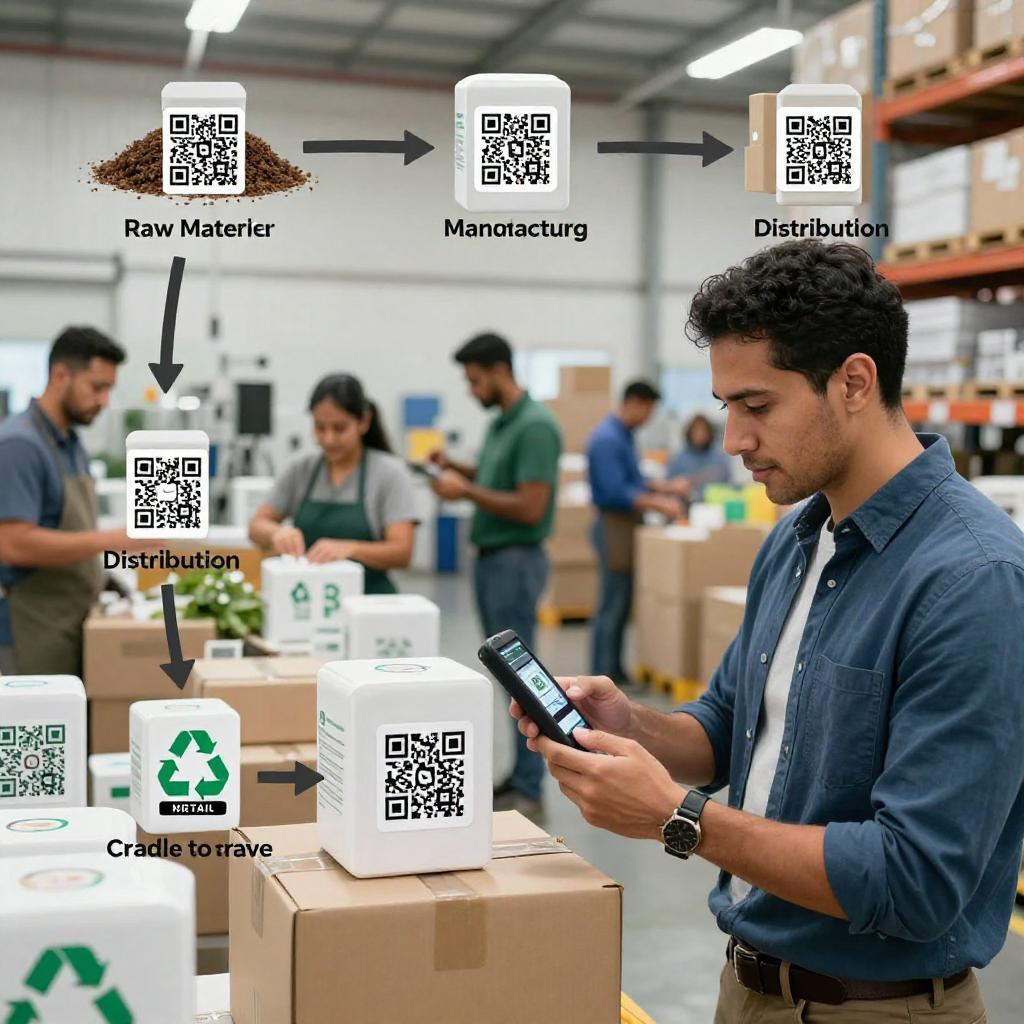
Manufacturing & Predictive Maintenance: QR Codes Meet IIoT
Why QR Codes Belong on the Factory Floor
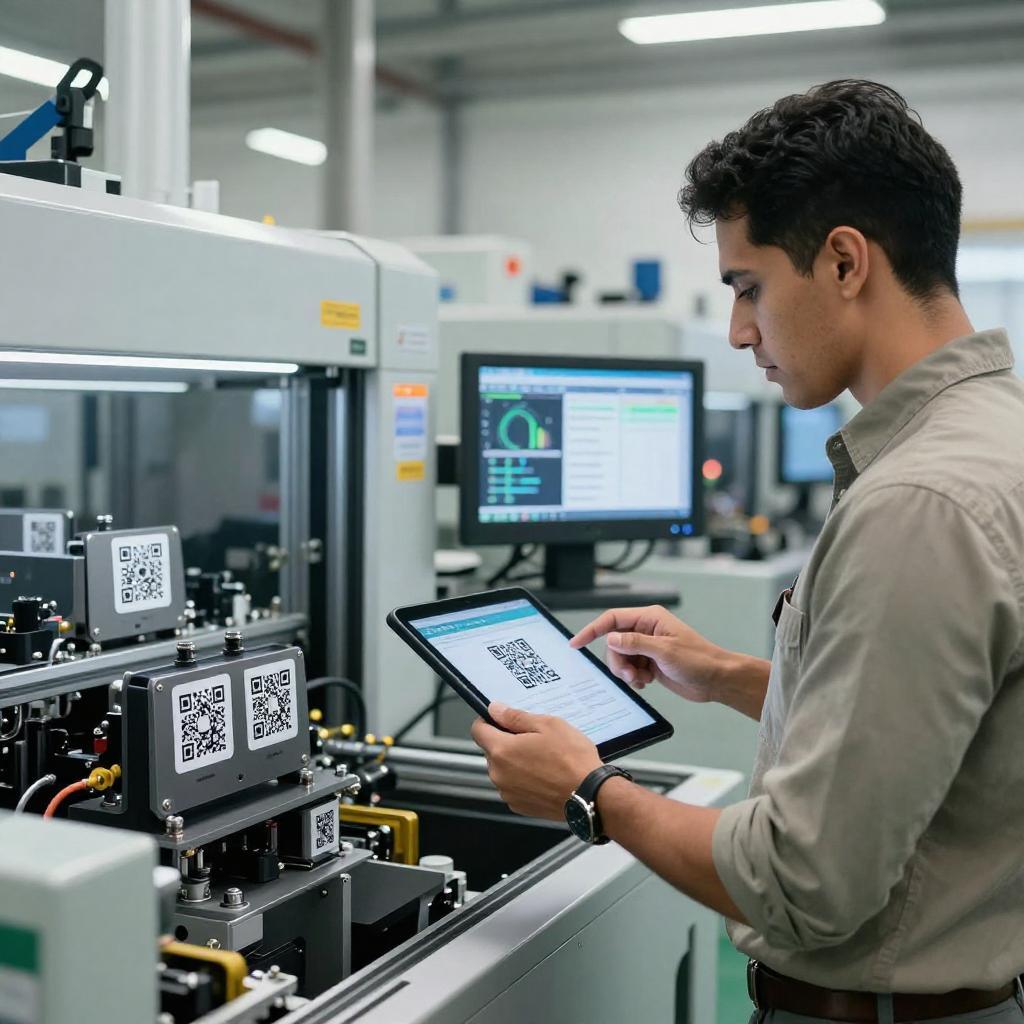
QR codes in business are no longer just for retail—on the factory floor they become a fast, low-friction bridge between physical assets and live operational data. When tied to Industrial IoT (IIoT) signals and maintenance systems, a single scan can reveal asset history, current condition, and next-best actions. This fusion turns everyday labels into digital transformation tools that reduce search time, accelerate decisions, and cut unplanned downtime.
Standards make these gains repeatable at scale. With the GS1 Digital Link standard, manufacturers can encode product identifiers and context into 2D codes that resolve to the right content for each role—technician, operator, or supplier—without re-stickering equipment after every process change. By adopting a standards-based resolver and governance model, plants gain a future-ready foundation for traceability, service documentation, and device onboarding. Learn more from the GS1 Digital Link standard overview at GS1 US.
From Static Labels to Living Asset Records
In an IIoT-enabled environment, scanning a code should do more than open a PDF—it should surface a living asset record: last vibration trend, temperature anomalies, torque signatures, and the service history that informs risk. This is where predictive maintenance shines, using sensor data and machine learning to anticipate failures before they cascade. For a clear primer on the approach and its impact on uptime, see the IBM overview of predictive maintenance.
Closing the Loop Between Maintenance and Materials
QR-linked workflows also tighten the connection between maintenance and materials. A scan can trigger BOM-specific spares, verify part compatibility by serial or batch, and pre-fill a work order with the right torque values and lockout procedures. The same infrastructure supports modern marketing strategies on the B2B side—think post-sale services, warranty upgrades, and guided training—delivered contextually at the exact machine and moment of need.
Building a Predictive Maintenance Stack That Scales
A practical architecture pairs edge gateways and historians with a cloud analytics layer, while the QR code acts as a human-speed pointer into that data fabric. Scans invoke APIs that fetch the latest condition indicators, recommended tasks, and safety notes—minimizing context switching on the line. For multivariate signal analysis across bearings, motors, and drives, Microsoft’s Azure Multivariate Anomaly Detector architecture illustrates how to detect subtle, cross-sensor patterns that precede failure.
Data Flow: Edge to Cloud with Standards and Security
As QR codes meet IIoT, cybersecurity and OT safety must be non-negotiable. Enforce device identity, signed firmware, and least-privilege access for scanners, apps, and gateways; segment maintenance networks from corporate IT; and log every scan-to-action event for auditability. NIST’s SP 800-82 guidance for operational technology security is a valuable reference for aligning QR-enabled workflows with ICS/IIoT best practices without compromising performance or safety.
Analytics That Anticipate Failure
High-ROI predictive models come from disciplined data practices: align sensor frequencies, label outcomes using verified maintenance events (not just alarms), and engineer features that represent physics-informed stress—harmonics, RMS energy, temperature deltas, pressure variance. Close the loop by linking model outputs to QR-coded work instructions, so technicians see actionable tasks—not just anomaly scores—and their feedback refines future predictions.
Change Management and ROI
Start small: one asset class, one facility, one end-to-end workflow from scan to completed work order. Measure time-to-diagnosis, avoided outages, and spare-parts turns to quantify the value. As wins compound, expand the pattern library, standardize code placement and content governance, and integrate with EAM/CMMS. The result is a resilient maintenance culture where digital transformation tools and QR-enabled access make every shift smarter, safer, and more productive.
In short, when manufacturers pair standards-based QR codes with IIoT telemetry and predictive analytics, they convert labels into living interfaces that accelerate decisions and extend asset life. It’s a pragmatic path to uptime and agility—and a foundation for modern marketing strategies in aftersales and services—built one scan, one insight, and one prevented failure at a time.