How Hotels Use QR Codes to Improve Guest Experience
Why QR Codes Are Reshaping Hospitality
Hotels are embracing QR codes in business as practical digital transformation tools that bridge physical spaces with mobile-first experiences. Guests already expect seamless, contactless interactions—think scanning for menus, amenities, or check-in details—so QR workflows meet people where they are. For operators, the value is twofold: minimize friction at high‑impact moments (arrival, dining, service requests) and unlock measurable engagement that improves staffing decisions and revenue strategy. When paired with modern marketing strategies, QR journeys turn static signage, key card sleeves, and in‑room collateral into dynamic, updatable touchpoints that lower print costs and speed time‑to‑market for promotions, while providing a clear path to capture preferences and deliver personalized offers without overhauling core systems.
From Check-In to In-Stay Convenience
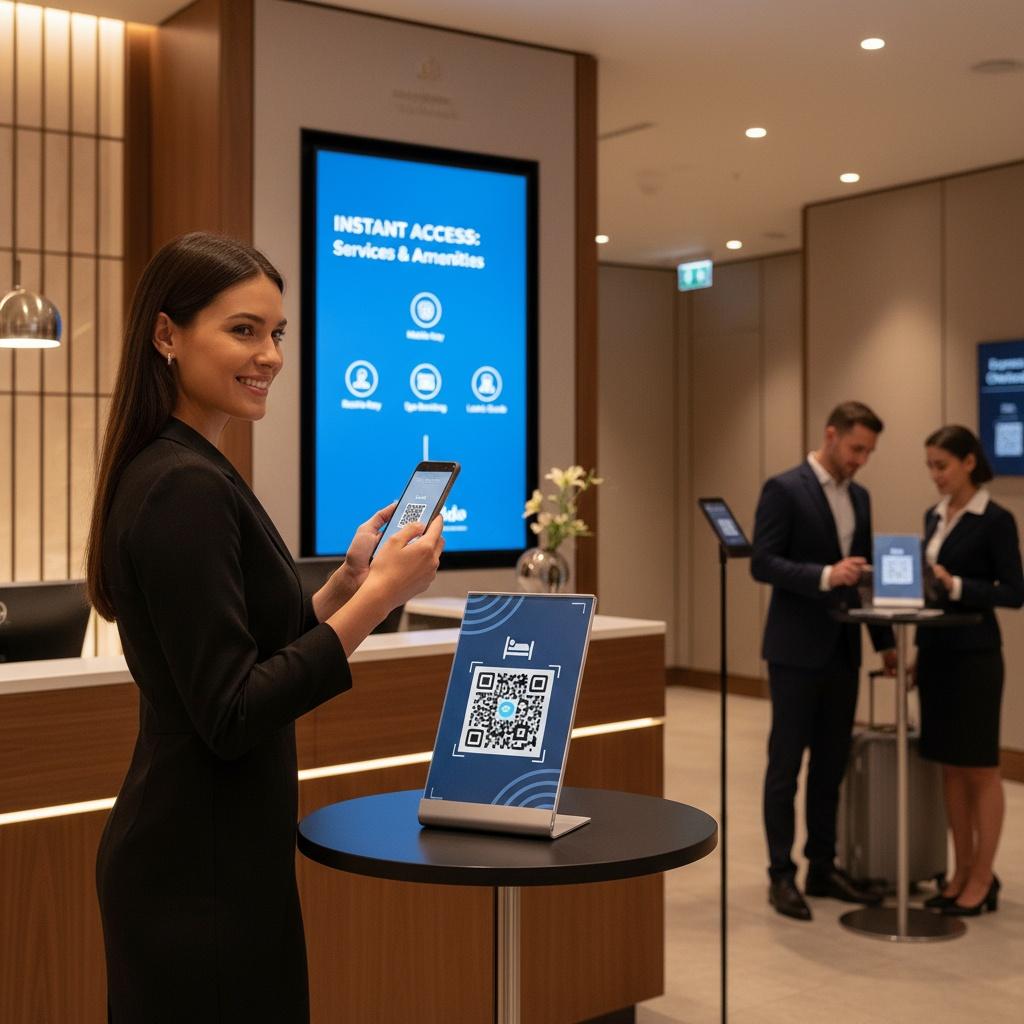
Across the stay, QR codes streamline tasks that historically caused bottlenecks. Guests can scan to start mobile check‑in, verify IDs, access digital keys, retrieve Wi‑Fi credentials, request housekeeping, or browse local recommendations—all without queuing at the desk. For teams, routing these requests through scan-driven forms centralizes data, shortens response times, and reduces interruptions. Importantly, each scan anchors context: where the code lives (lobby, elevator, pool), when it was used (peak or off‑peak), and which action guests took. That context helps managers optimize staffing, redesign lobby flows, and prioritize service recovery in real time, turning what used to be a static arrival into an adaptive, guest‑led experience.
Data-Driven Personalization and Upsells
QR journeys naturally support data-informed personalization. Because landing pages can be dynamic, a single code can serve different content by time of day, language, loyalty tier, or room type—an approach aligned with modern marketing strategies. Hotels can A/B test offers (late checkout, spa add‑ons, premium Wi‑Fi) or highlight on‑property experiences with high conversion potential, then roll out winners property‑wide. Crucially, privacy and consent controls must be built into these flows, with clear disclosures and easy opt‑outs. When done well, QR codes become lightweight digital transformation tools that extend the CRM and POS without heavy integrations, increasing total revenue per available room while ensuring guest trust.
Proven Use Cases From the Field
Industry case studies show QR codes reduce friction and boost satisfaction when deployed at moments that matter. For a broad view of practical deployments—touchless check‑in/out, digital menus, mobile payments, and tipping—see eTip’s overview of hotel QR code use cases. These patterns are especially useful for hotels facing labor constraints: shifting low‑value interactions to self‑service frees associates to focus on empathy‑led moments, from welcoming families at the front desk to resolving complex issues quickly. The result is a better balance between productivity and hospitality, where technology removes effort, not warmth.
F&B Ordering and Room Service Efficiency
Food and beverage is a prime arena for QR acceleration. Poolside, lobby bars, and busy breakfast periods benefit when guests can scan, browse, and place orders from their phones. In practice, this cuts wait times and reduces abandoned orders. The Barceló Hotel Group mobile ordering case study illustrates how QR-driven workflows improve speed of service and throughput while enabling targeted promotions (e.g., happy hour specials by time and location). For operators, these digital transformation tools connect to POS and inventory, helping forecast demand, curb waste, and schedule staff more intelligently across outlets.
Feedback Loops and Reputation Management
QR codes also strengthen service recovery. Prompting guests to scan for a quick pulse check after check‑in, or at key in‑stay moments, surfaces issues before they become negative reviews. TrustYou’s guide to using QR codes for real-time guest feedback outlines how to capture insights at the front desk, in welcome packets, and in-room, then trigger alerts to on‑site teams for rapid resolution. When feedback is timely and actionable, hotels lift satisfaction scores, protect ADR, and inspire authentic post‑stay reviews—without “gating” or violating platform policies—because problems are resolved while the guest is still on property.
Safety, Sustainability, and Brand Storytelling
Beyond convenience, QR codes support safety, hygiene, and sustainability goals. During the contactless pivot, many hotels replaced printed compendiums and menus with updatable digital guides—a practice that continues to cut waste and keep information current. For examples and considerations around contactless services, see Gourmet Marketing’s analysis of QR-enabled contactless services. Design matters: ensure high contrast, adequate size, intuitive placement, and short URLs behind the code to aid accessibility and trust. Pair each scan with brand-forward storytelling—local partnerships, sustainability efforts, or chef’s notes—so QR codes in business don’t feel utilitarian, but elevate the property’s unique voice.
Implementation Checklist for Hotel Leaders
To operationalize, map the guest journey and prioritize high‑impact moments; choose a secure, dynamic QR platform; integrate with PMS/POS where it moves the needle; instrument analytics (UTMs, events) for clear attribution; establish governance for link hygiene; train associates to introduce scans confidently; localize content and support multiple languages; and provide a non‑QR fallback for accessibility. Monitor adoption, iterate offers, and track revenue and satisfaction shifts to validate ROI. Done thoughtfully, QR codes become small but mighty digital transformation tools that remove friction, amplify modern marketing strategies, and let staff spend more time delivering hospitality—the ultimate driver of memorable stays and lasting loyalty.