Enhancing Manufacturing Transparency with QR Codes
Why transparency matters in modern manufacturing
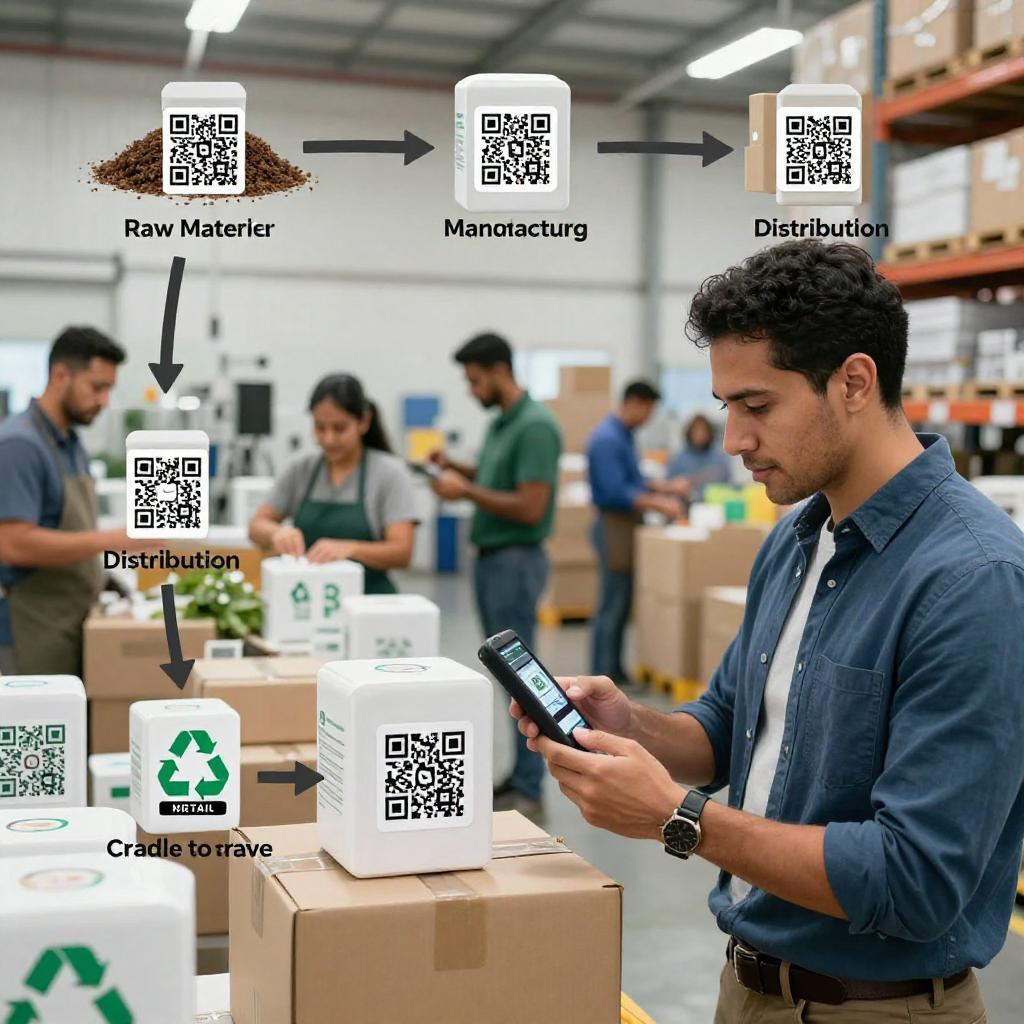
Manufacturers face rising expectations to prove where products come from, what they are made of, and how they perform across their lifecycle. QR codes in business have quickly become one of the most practical digital transformation tools to meet those expectations, connecting physical goods to trustworthy, real-time data. By placing a single, scannable entry point on packaging or product labels, brands can surface provenance, certifications, repair instructions, and sustainability insights without redesigning every touchpoint. Just as importantly, the same code can improve internal visibility for inventory, recalls, and supplier performance. In short, QR codes are evolving from simple marketing add-ons to a foundation for modern marketing strategies and operational transparency.
From barcodes to web links: GS1 Digital Link
Traditional barcodes identify a product, but modern 2D codes can identify the product, the lot, and even the unique serialized item while resolving to the right data on the web. That is what GS1 Digital Link enables: a standards-based way to encode GTIN, batch/lot, and serial information in a URL, so one code can serve compliance, traceability, and consumer engagement. With structured redirects, manufacturers can route different users to different experiences (e.g., service technicians vs. end customers) without changing the code on pack. This approach also reduces packaging clutter by unifying multiple codes into one scannable symbol. For a deeper overview of how the standard works and why it matters, see the official GS1 Digital Link overview at GS1 US.
Regulatory tailwinds and the Digital Product Passport
Regulators and retailers are reinforcing the move to digital transparency. In the EU, the Digital Product Passport concept is driving a shift toward accessible product data covering materials, repairability, and end-of-life handling. In parallel, GS1’s industry initiative known as Sunrise 2027 encourages retail point-of-sale systems to read 2D codes, accelerating the migration away from linear UPC/EAN-only strategies. Together these forces make QR codes not just convenient, but essential for meeting compliance, enabling traceability, and future-proofing product data access. The manufacturers who adapt early can streamline audits and reduce compliance overhead, turning regulation into competitive advantage.
Business outcomes: beyond compliance to value
Traceability can feel like a checkbox until you quantify the business outcomes. With item-level or lot-level visibility, quality teams can pinpoint affected inventory in minutes, not days, shrinking the scope and cost of recalls. Operations leaders can use scan data to verify supplier performance, reduce gray market leakage, and strengthen anti-counterfeiting measures. Service teams can surface maintenance schedules and parts diagrams at the exact moment and place of need, shortening downtime. Sustainability and ESG teams can substantiate claims with accessible, verifiable data, building trust with regulators, retailers, and consumers. And with a single, standards-based code, you cut packaging complexity and gain a durable platform for ongoing innovation.
Data model and systems you’ll need
To make transparency work at scale, get the identity model right. Start with GTINs and extend to batches/lots and serial numbers where appropriate, then connect these identifiers to authoritative data sources. Capture event data (for example, commissioning, packing, shipping, and receiving) using EPCIS or equivalent event models so you can answer who, what, when, where, and why across the chain. Curate consumer-facing content in your PIM/MDM and keep regulatory artifacts versioned and auditable. Most importantly, govern redirects and link resolution so a single URL can adapt to context while remaining stable over time. A practical reference for architects and program leads is the GS1 Digital Link implementation guide from GS1 US.
Printing and packaging: migrating to 2D codes
On the factory floor, successful programs start with reliable variable data printing and in-line verification. Camera systems should validate code quality, content, and serialization to prevent downstream issues. Many brands are consolidating multiple marks into a single QR or Data Matrix, freeing up label real estate and simplifying change control. And as retail environments adopt 2D scanning, replacing static UPCs with web-enabled codes becomes a practical step rather than a risky leap. For packaging and brand teams mapping this transition, review the GS1 guidance for brands on 2D barcodes and Digital Link to align design, data, and scanning requirements.
Marketing meets operations: one code strategy
When one code powers both operations and engagement, marketers gain new levers without adding complexity to packaging. Unique or semi-unique QR codes enable modern marketing strategies like contextual content, loyalty enrollment at the point of use, and post-purchase tutorials tied to the actual item. Because experiences are URL-driven, you can iterate messaging, run A/B tests, and localize content without reprinting labels. You also earn privacy-safe, first-party insights as customers volunteer preferences and behaviors in exchange for utility, not just promotions. For examples of connected packaging in action and why GS1 Digital Link matters to CX, see Blue Bite’s analysis of GS1 Digital Link and connected packaging.
Roadmap for manufacturers
Start with a discovery sprint to document products, data owners, and target use cases, then pilot a single line or SKU to prove scanning, printing, and link resolution. Establish a cross-functional governance model that includes packaging, quality, regulatory, IT, and marketing, with clear SLAs for content and redirect changes. Scale with a reusable data model (GTIN, lot/serial, EPCIS events) and a change-managed packaging toolkit so new SKUs can launch with minimal friction. As wins accumulate, extend the same code to service, training, and sustainability storytelling, turning QR codes in business into a durable platform for digital transformation tools across the enterprise. The manufacturers who take this path now will not only meet rising transparency expectations—they’ll build a responsive, data-driven supply chain that compounds value over time.