How QR Codes Improve Delivery Tracking for Customers
Why QR codes have become a delivery-tracking staple
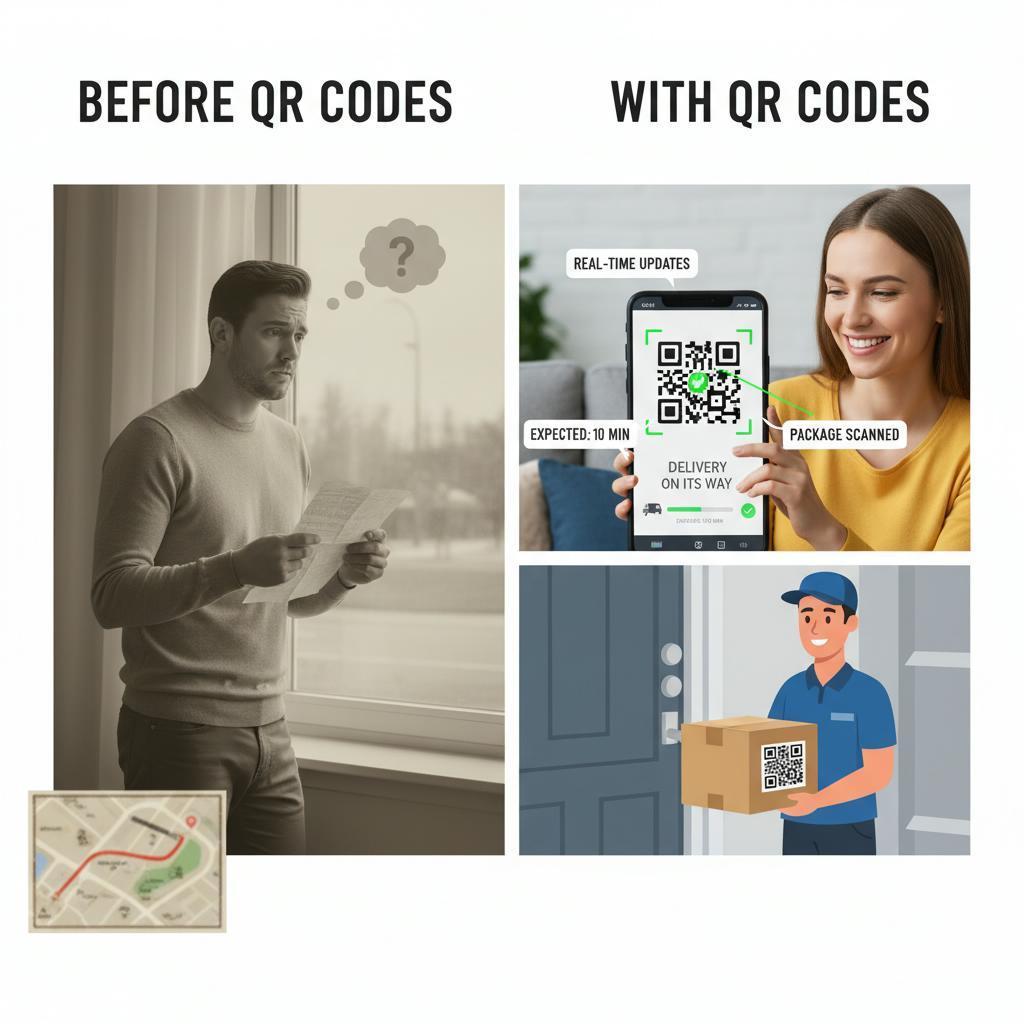
QR codes turn a static shipping label into a dynamic, customer-first experience. Instead of typing a long tracking number, a quick scan opens a live status page on mobile, complete with ETA, delivery options, and alerts. For companies using QR codes in business, this creates a low-friction bridge between the physical parcel and a digital service layer—one of the most practical digital transformation tools for last-mile transparency and customer trust.
From barcodes to 2D codes: what changes for customers
Traditional 1D barcodes power operations but carry limited information. By contrast, 2D codes like QR can encode more data, point to dynamic URLs, and update the content behind the code over time. That means customers get richer status details, how-to instructions, returns options, and verified product info from the same scan. For standards and interoperability guidance, see GS1 guidance on 2D barcodes in the supply chain, which explains how QR codes enhance visibility across logistics and customer touchpoints.
Real-time visibility without app friction
Most shoppers won’t download a new app just to track a package. QR codes solve that by launching a mobile web page that’s simple, fast, and secure—reducing WISMO (“where is my order?”) tickets while boosting satisfaction. Scans can surface personalized options like rescheduling, safe-place selection, or pickup lockers. This aligns with broader research on last-mile transparency and performance improvements, such as McKinsey insights on transforming last-mile delivery, which underscores how real-time data drives better customer outcomes.
Business benefits across the last mile
QR-enabled tracking compresses costs and expands revenue moments. Beyond fewer support contacts, brands can enrich the tracking page with proactive status updates, proof-of-delivery photos, and clear next steps—reducing failed attempts. Because each scan is a micro-interaction, companies can use modern marketing strategies to reinforce brand trust, collect zero-party preferences (with consent), and offer relevant FAQs or accessories—without turning the experience into an ad.
Reducing failed deliveries and support volume
QR codes can authenticate recipients with one-time codes, guide couriers to safe-drop instructions, or trigger instant pickup verification at lockers or stores. When a delay happens, scanning the label can immediately show revised ETAs and actionable options. The result: fewer missed deliveries, fewer repeat routes, and fewer calls to support. Over time, the scan data also helps teams uncover bottlenecks, improve route planning, and refine communication cadences.
Data, privacy, and security by design
Well-implemented QR workflows use short-lived tokens, device-bound sessions, and transport encryption so customers see only what’s relevant to their parcel. PII should be minimized in the code itself, with sensitive data kept server-side. For a technology perspective on secure, connected operations, review the IBM perspective on QR codes in logistics and IoT, which highlights how scannable interfaces can streamline visibility while maintaining governance and control.
Implementation checklist and KPIs
To get results fast, treat the QR experience as a product: select dynamic QR infrastructure; standardize label placement and contrast; prefill tracking details; support app deep links when installed and mobile web when not; enable fallback via SMS or email; set error-correction to handle smudges; and test in low light and on curved surfaces. Track KPIs like scan-through rate, self-service completion, delivery success rate, first-attempt success, and WISMO deflection—plus NPS and CSAT for end-to-end impact.
What’s next: QR plus NFC, geofencing, and returns
Returns are becoming label-free as QR codes trigger in-store or carrier counter printing, reducing friction and waste. Expect convergence with NFC, geofencing, and multilingual content that adapts to location and device—all feeding predictive operations. For executives, the takeaway is clear: QR codes are practical digital transformation tools that modernize last mile, lower cost to serve, and create customer-centric touchpoints consistent with modern marketing strategies—without asking customers to change their habits.