How QR Codes Simplify Sharing of Social Media Content
QR codes have quietly become one of the most effective digital transformation tools for making social media sharing effortless. For brands and creators, they remove the friction between a moment of interest and a meaningful action—following a profile, viewing a campaign video, subscribing to a newsletter, or saving a promo. In an era defined by modern marketing strategies and fast-moving attention, QR codes in business offer a lightweight, low-cost bridge between the physical and digital worlds.
Why QR Codes Remove Friction From Social Sharing
From typing to tapping: the cost of effort
Every extra tap, search, or keystroke loses people. A QR code compresses the path from discovery to destination—no typing handles, no hunting for the right profile, no misspellings. This is why the medium excels at social sharing: it replaces cognitive load with a simple scan that deep-links into the right app or mobile page. UX research backs this up; see the Nielsen Norman Group’s QR‑code usability guidelines for best practices that minimize friction and maximize completion rates: QR‑code usability guidelines from Nielsen Norman Group.
One code, many destinations
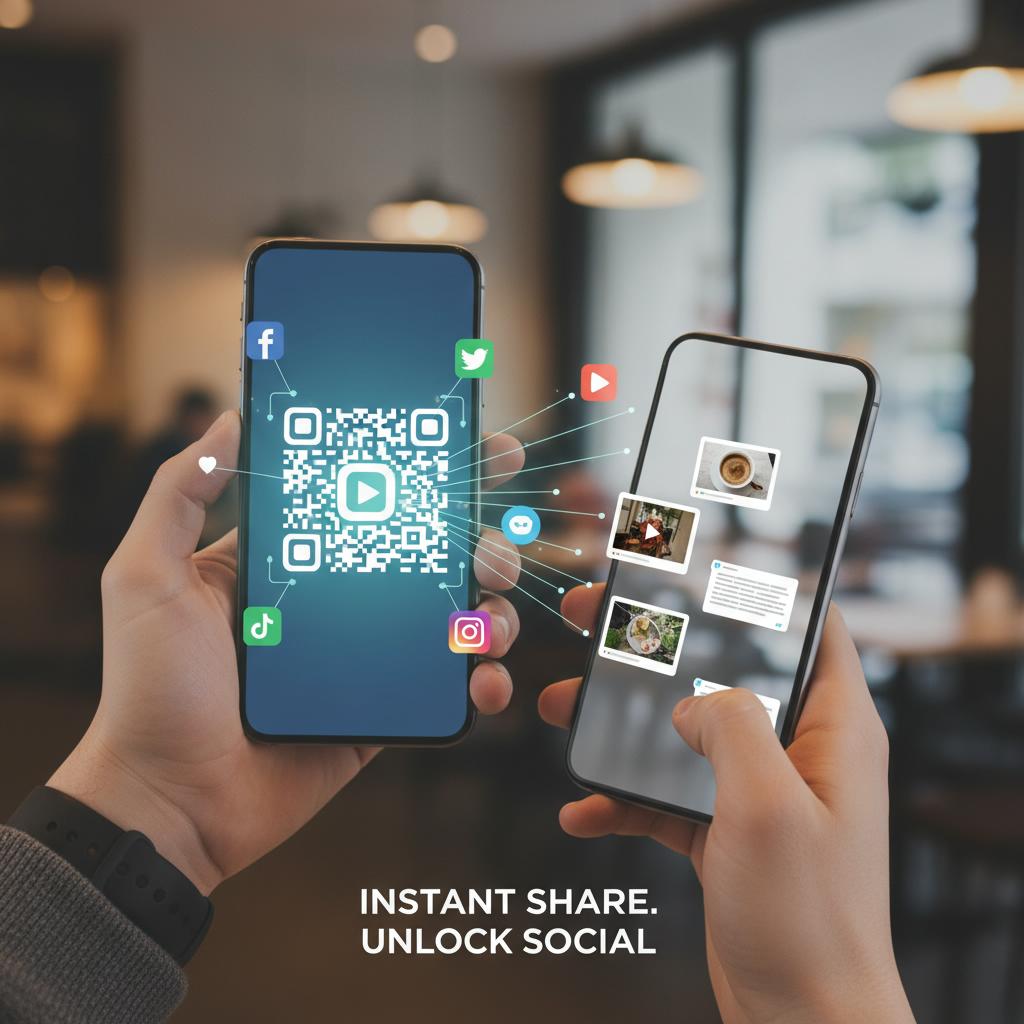
A single QR code can route people intelligently: send iOS users to the native app, Android users to Google Play, and everyone else to a responsive landing page or a social link hub. For cross-platform campaigns, this means you can promote Instagram, LinkedIn, YouTube, or TikTok from one visual cue. With dynamic redirects, you can update the destination mid-campaign without reprinting, aligning QR codes in business with agile, modern marketing strategies.
Turning Offline Moments Into Social Engagement
Packaging, events, and OOH with measurable links
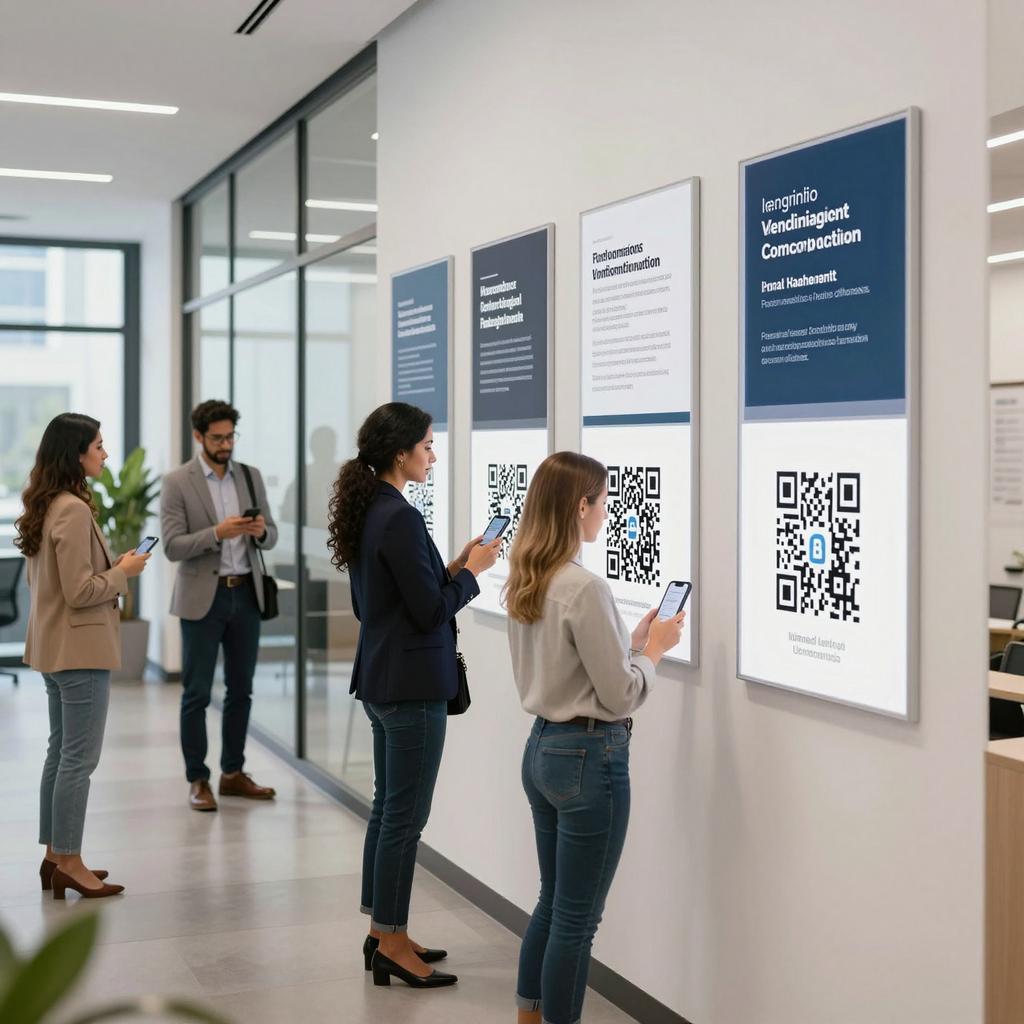
Put QR codes where intent is highest—event badges, product packaging, in-store displays, and out-of-home (OOH) ads—to turn curiosity into follows, shares, and saves. Add UTM parameters and channel-specific codes to attribute scans precisely to each placement. China’s super-app ecosystem illustrates what happens when QR scanning becomes second nature, accelerating social connections and community building; see the WeChat QR adoption case study from Nielsen Norman Group for lessons on how low-friction scanning behaviors can scale.
Smarter cross-platform journeys
QR codes can orchestrate multi-step social journeys: scan a poster at a pop-up to follow the brand on Instagram, unlock a short-form video, and then join a private community. Pair codes with incentives—exclusive content, early access, or a giveaway—to nudge sharing. Because the scan starts on a personal device, the handoff from offline to social is smooth, making QR codes a practical backbone for digital transformation tools in retail, hospitality, and events.
Best Practices to Optimize QR-Driven Social Growth
Design for scanability and accessibility
Consistency wins. Use high contrast, a sufficient quiet zone, and a minimum size of roughly 2.5 cm (1 in) for arm’s-length scans; test at real distances and lighting. Add a short, human-friendly URL as a fallback and a micro-CTA (for example, “Scan to follow and save 10%”). Include alt text and captions for digital placements to support assistive technologies. For more context on end-to-end, low-friction flows, review Nielsen Norman Group research on WeChat’s integrated UX.
Measure, secure, and scale
Treat QR codes like any performance channel. Use unique codes per location and creative to A/B test offers, CTAs, and landing pages. Monitor scan-to-follow and scan-to-share conversion, not just raw scan counts. For security and trust, brand your short links, avoid surprising redirects, and show clear context around the destination (logo + label like “Opens Instagram”). Rotate dynamic codes to reduce link rot, and document handling procedures to mitigate spoofing risks in public spaces.
Team workflows that accelerate adoption
Make QR part of your standard campaign kit. Provide templates with brand-safe frames, store codes in a shared asset library, and bake QR placements into event checklists, packaging specs, and OOH briefs. When product, social, and retail teams co-own a simple workflow, QR codes evolve from one-off experiments into reliable growth levers across modern marketing strategies.
Conclusion: The simplest bridge often wins
QR codes thrive because they make sharing social media content easy at the exact moment attention peaks. By reducing effort, enabling measurable offline-to-online journeys, and fitting neatly into existing creative workflows, they act as practical digital transformation tools that compound over time. For brands serious about efficiency and attribution, the takeaway is clear: design a scan-first path for discovery, follow-through, and sharing—and let the simplest bridge do the heavy lifting.