How to Turn QR Scans into Qualified Sales Leads
Why QR Scans Are a Goldmine for Qualified Leads
QR codes in business have surged from novelty to necessity, becoming one of the most efficient digital transformation tools for connecting offline moments to modern marketing strategies. A scan is an explicit act of intent: someone saw your message, found it relevant, and took action. The key is designing the post-scan experience to capture first-party data, qualify interest, and route prospects seamlessly into your revenue engine without friction.
Intent-Rich by Design
Scans happen in context—on packaging, at events, on signage, in direct mail—which means they are often warmer than typical website visits. Treat placement and call-to-action as pre-qualification levers: promise value that filters for buyer readiness (e.g., a product configurator, ROI calculator, or demo calendar) and you’ll naturally attract higher-fit prospects. Align each QR asset to a single, specific job to be done, so the destination and the data you collect mirror the buyer’s immediate intent.
From Scan to Signal: Capturing Zero- and First-Party Data
Modern marketing strategies thrive on consented data. Use short, mobile-first forms and progressive profiling to collect only what you need now (role, use case, timeframe), then enrich later through nurturing. Offer value for value—instant quotes, gated playbooks, VIP access, or warranty registration—to earn accurate data. Build trust with clear privacy language and ensure your tracking is transparent and respectful.
Design Campaigns That Qualify, Not Just Count
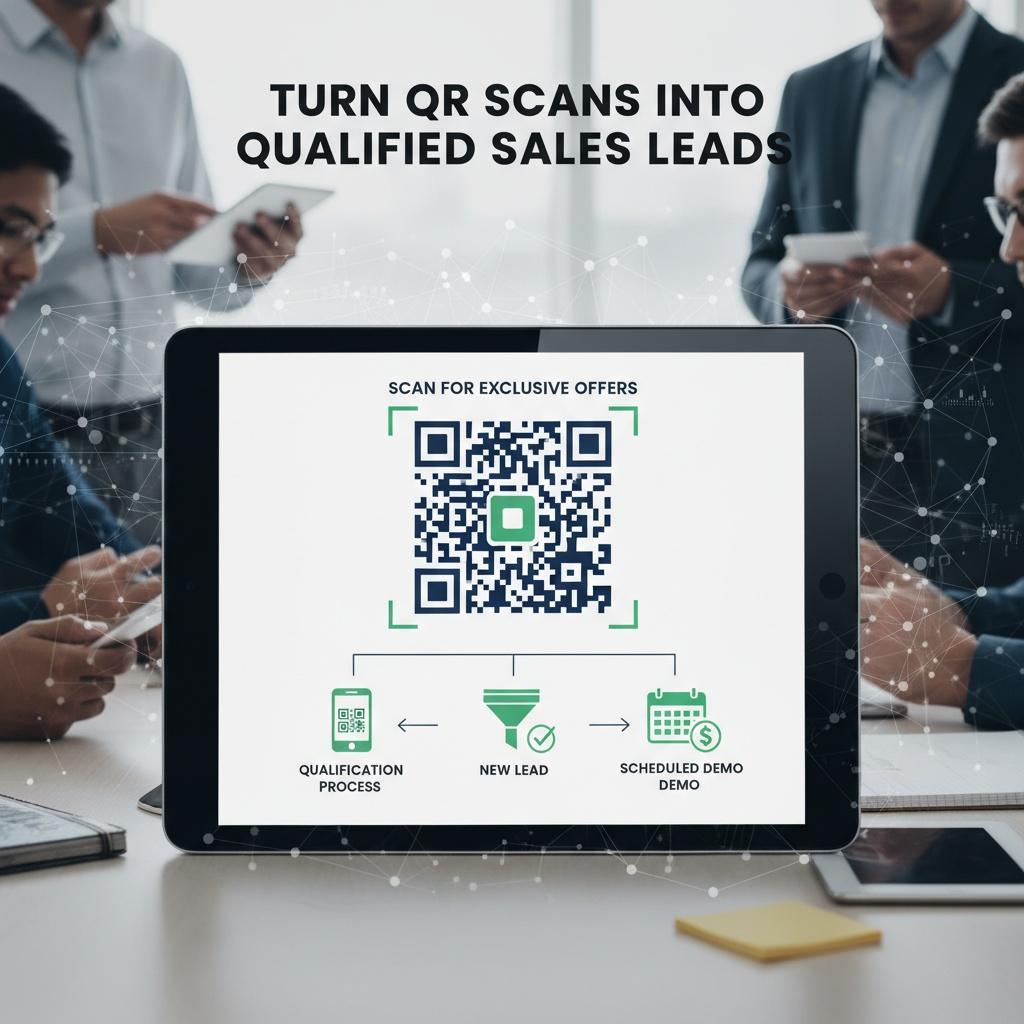
The fastest way to turn scans into sales conversations is to structure your flow for qualification. Gate high-value content with concise forms, add light routing questions, and score responses based on buying signals. For inspiration on creative use cases and conversion-minded flows, see HubSpot’s guide to QR code lead generation, then tailor the tactics to your ICP and sales process.
Route to the Right Destination with Open Standards
Avoid dead-end scans. Dynamic destinations let you route by geography, language, campaign, or lifecycle stage. On product packaging, the GS1 Digital Link standard enables a single QR to connect shoppers to rich, context-aware experiences (e.g., product details, warranty, or offers) while safeguarding accuracy and scalability. Standards future-proof your QR program and make data easier to unify across channels.
Measure What Matters with UTM Discipline
Every QR should carry clean UTM parameters to attribute scans to the exact asset, placement, and message. Standardize naming, then mirror UTMs in your CRM for full-funnel reporting (scan→form→opportunity). Google provides clear guidance on parameters and campaign tagging in Google Analytics UTM documentation. Track scan location, time of day, and device when possible, and use these insights to refine offers and creative.
Accelerate Nurture and Sales Handoff
Speed is a qualifier. Trigger instant, personalized follow-ups (email, SMS, or in-app) tied to the specific QR path and answers collected. Sync leads to your CRM with source detail, score them, and alert reps when criteria are met. For execution ideas and channel orchestration, review Adobe’s overview of QR code marketing, then implement the pieces that fit your stack and timeline.
The Playbook and the Pitfalls
Start small: one audience, one clear CTA, one metric that maps to revenue. Build a mobile-first destination, apply UTM discipline, enable progressive profiling, and connect automation to sales. Avoid vague CTAs, slow-loading pages, and orphaned scans without attribution. The takeaway: QR codes in business become true digital transformation tools when you combine context-aware destinations, standards-based delivery, rigorous tracking, and swift, value-led nurturing. Do that consistently, and every scan can become a step toward a qualified sales conversation—not just another vanity metric.