How QR Codes Reduce Wait Times in Restaurants
QR codes have moved from novelty to necessity, becoming one of the most practical digital transformation tools in hospitality. For operators under pressure to increase table turns without sacrificing service, QR codes in business workflows streamline ordering and payment, compressing the entire guest journey. As part of modern marketing strategies, they also surface real-time insights that drive smarter promotions and a more personalized experience—without adding labor.
The Wait-Time Problem in Restaurants
Most delays cluster around three pinch points: getting the order to the kitchen, getting items to the table, and getting the check paid. Traditional handoffs—flagging a server, waiting for a terminal, queuing at the POS—introduce variability and idle time. In busy periods, even 90 seconds of friction per table compounds into long lines, frustrated guests, and lost sales. Reducing these micro-delays with self-service touchpoints is the fastest path to shorter waits and higher throughput.
Where QR Codes Compress the Service Cycle
Scan to View and Order
QR menus pull the menu and modifiers onto the guest’s phone, letting orders reach the kitchen instantly and accurately. That eliminates the wait for a server to visit the table just to capture an order, and it reduces rework from misheard items. Operators report faster table turns and fewer bottlenecks when QR ordering is integrated with the POS and kitchen display systems. For a broader view of efficiency gains, see Restaurant365’s perspective on the efficiency and profitability benefits of QR code menus.
Scan to Pay at the Table
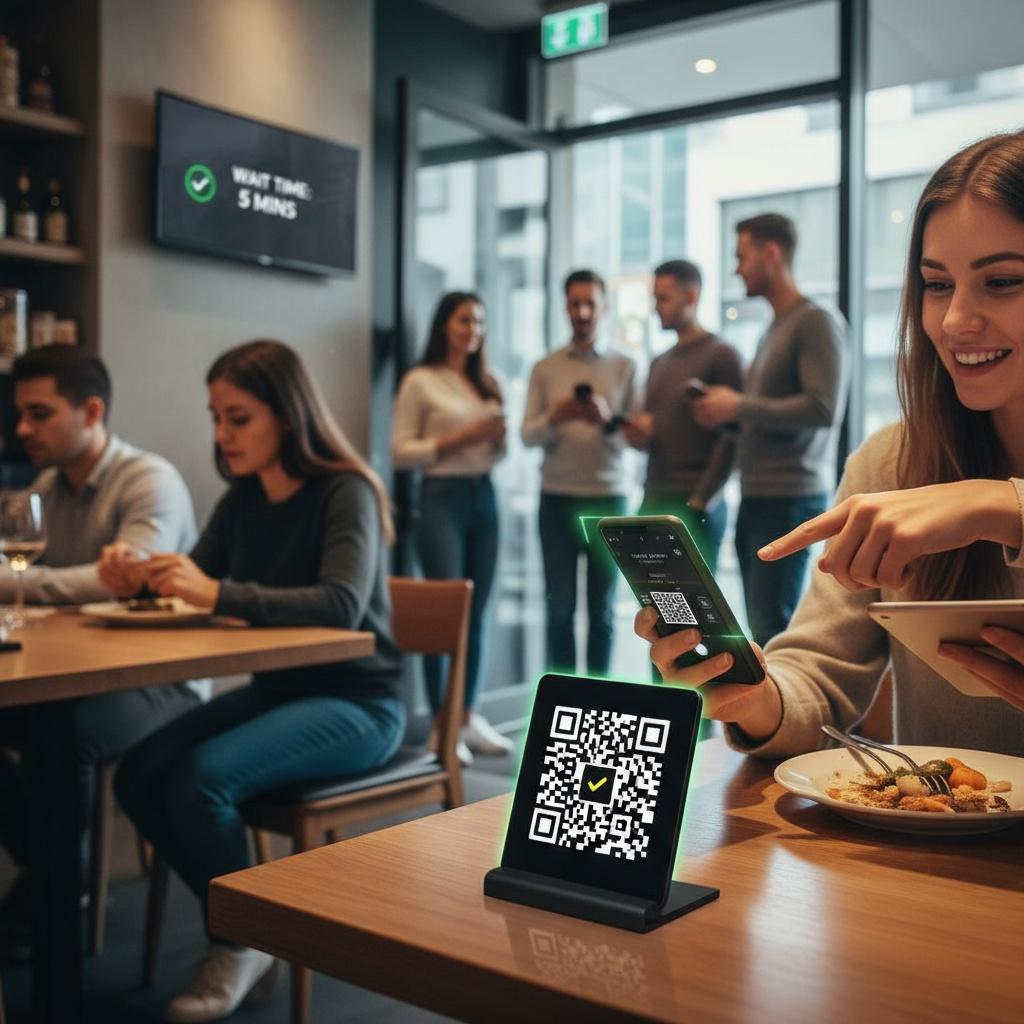
Payment is often the longest lag at the end of the meal. A QR code on the check lets guests split, tip, and pay in seconds—no card handoff, no terminal juggling, no waiting for the server to return. This single change can reclaim several minutes per table during peak. Providers have shown that scan-to-pay not only shortens the wait but can lift gratuities and guest satisfaction; Sunday highlights how QR codes on the bill reduce wait times and boost tips.
Real-Time Throttling and Staff Coordination
Because QR flows timestamp every step—from first scan to final payment—managers can throttle pacing and redeploy staff dynamically. If order volume spikes, you can slow down kitchen acceptance, prioritize high-margin items, or route runners where they’re most needed. The result: fewer bottlenecks, smoother handoffs, and a calmer dining room even when volume is high.
Measuring ROI and Proving the Business Case
Track the metrics that matter: time-to-first-order after seating, average dwell time, percentage of digital orders, fulfillment time, and payment completion time. Pair these with sales KPIs like average check, item attachment rate, and table turns per hour. Case studies suggest QR flows can reduce payment time by several minutes and push more orders without extra labor. For strategic framing, see Sunday’s take on the importance of QR code ordering in restaurants’ digital transformation, underscoring QR codes as core digital transformation tools.
Implementation Pitfalls and Best Practices
Success hinges on details: place QR codes where they’re visible and scannable; ensure fast, guest Wi‑Fi; keep menus lightweight and accessible (contrast, alt text, large tap targets); offer a printed fallback and clear allergen info; and train staff to guide guests without pressure. Integrate with POS and KDS for seamless routing, enable secure payments with PCI-compliant partners, and use modern marketing strategies—such as time-bound upsells and loyalty prompts—to turn the digital moment into measurable revenue, not just convenience.
Conclusion
QR codes reduce restaurant wait times by eliminating low-value handoffs, accelerating ordering, and making payment effortless—all while unlocking data to optimize staffing and menus. Framed as QR codes in business operations rather than a gimmick, they deliver a practical ROI: faster turns, happier guests, and leaner labor. Start small with scan-to-pay, add QR ordering as teams adapt, and let the data guide continuous improvement. The payoff is a dining room that moves faster and feels better—for guests and staff alike.